
It was a Tuesday afternoon.
I was getting my 9-year-old organized after his first full day of fourth grade, while my 4-year-old had just navigated another year of daycare. At 5:30, the phone rang.
It was a landline, attached to the wall in the hallway, but it had a long cord that I could pull into the kitchen.
It was Judy.
“Turn your TV on. The US is being bombed. There are planes falling out of the sky in New York.”
I scrambled to get the little box sitting on the kitchen counter tuned to my go-to Greek channel, Mega.
And there it was.
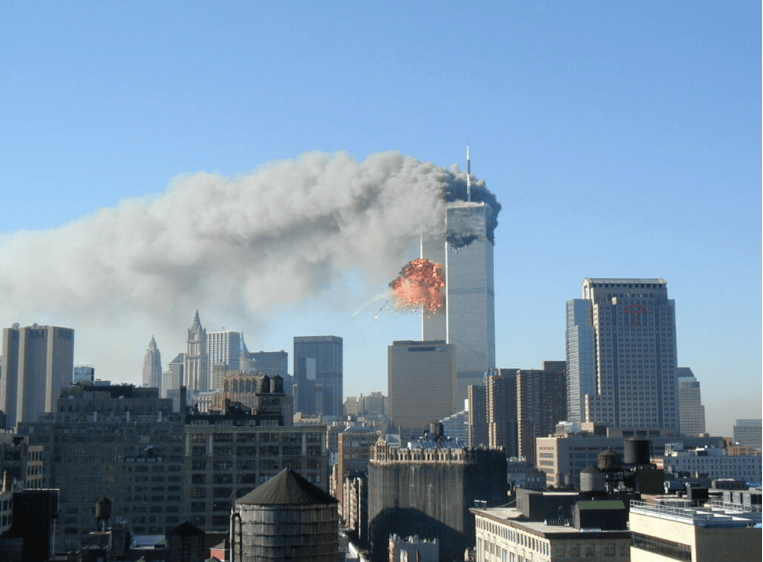
A long shot of the Twin Towers, one of them punctured by a gaping hole of fire, with grey smoke billowing into the sky.
The kids and I stood glued to the television.
My fourth grader looked at me.
“Mom, what is it? What’s happening?”
We were witnessing history in real time.
I called my husband at the shop and told him what we were seeing on the television. He said people were coming into the shop, babbling about an attack in America.
The phone kept ringing.
Calls from expat friends on the island. Then my Mom and Dad called.
I remember knowing that it had been Labor Day weekend, so people in America were returning to work after the last hiatus of summer.
Mykonos is seven hours ahead of New York and eight hours ahead of Chicago. It was 9 a.m. in New York when the first attack happened—4 p.m. here.
Incredulously, we continued to watch.
“Good on them. They deserved it.”
The next morning, after a sleepless night of continuous television coverage, I got the kids ready for school and daycare and opened the shop.
People came in non-stop, thinking I might have more information because I was American.
Around mid-morning, Yianni, a regular customer, came into the shop.
“Did you see it? You saw it? Good on them. They deserved it.”
“To eithes, to eithes. Kala na pathoune.”
My blood ran cold.
He was reveling in the horror of the attacks on the Twin Towers. He was telling me that America deserved what had happened.
Living in Europe has always given me a unique perspective on how the United States is viewed. But what I encountered in the local reaction that day was difficult to comprehend.
“Unsympathetic” would have been the least harsh way to describe it.
As the days progressed and more information became available, I heard the same questions over and over from Greeks:
How many times had the United States gone into foreign countries that were not “ideologically aligned” with America?
How many governments had been overthrown, individuals silenced, or entire groups destroyed?
The tables had turned, they said.
America was finally being fed back the dirty dish it had been force-feeding others for years.
It was an uncomfortable perspective to hear—and an even more uncomfortable one to absorb while watching my own country attacked.
Greece After 9/11
The aftermath of September 11 forced an entire planet to shift.
And Greece was no exception.
Greece’s experience was very different from America’s. Greece was not attacked on 9/11, yet the attacks came at an especially important moment: Athens was preparing to host the 2004 Olympic Games, while Greece was also dealing with its own long history of terrorism.
Before September 2001, Greece already had a serious counterterrorism problem.
The most notorious organization was November 17 (17N), a far-left terrorist organization that had operated since 1975 and carried out assassinations, bombings and attacks against Greek and foreign targets.
But ordinary Greek life was relatively relaxed by American standards.
Airport security existed, but there was nothing resembling today’s enormous international counterterrorism infrastructure.
Then came 9/11.
Suddenly Greece was under a very different kind of scrutiny.
The 2004 Olympics were only three years away.
Could Greece protect hundreds of thousands of athletes, spectators, journalists and officials from terrorism?
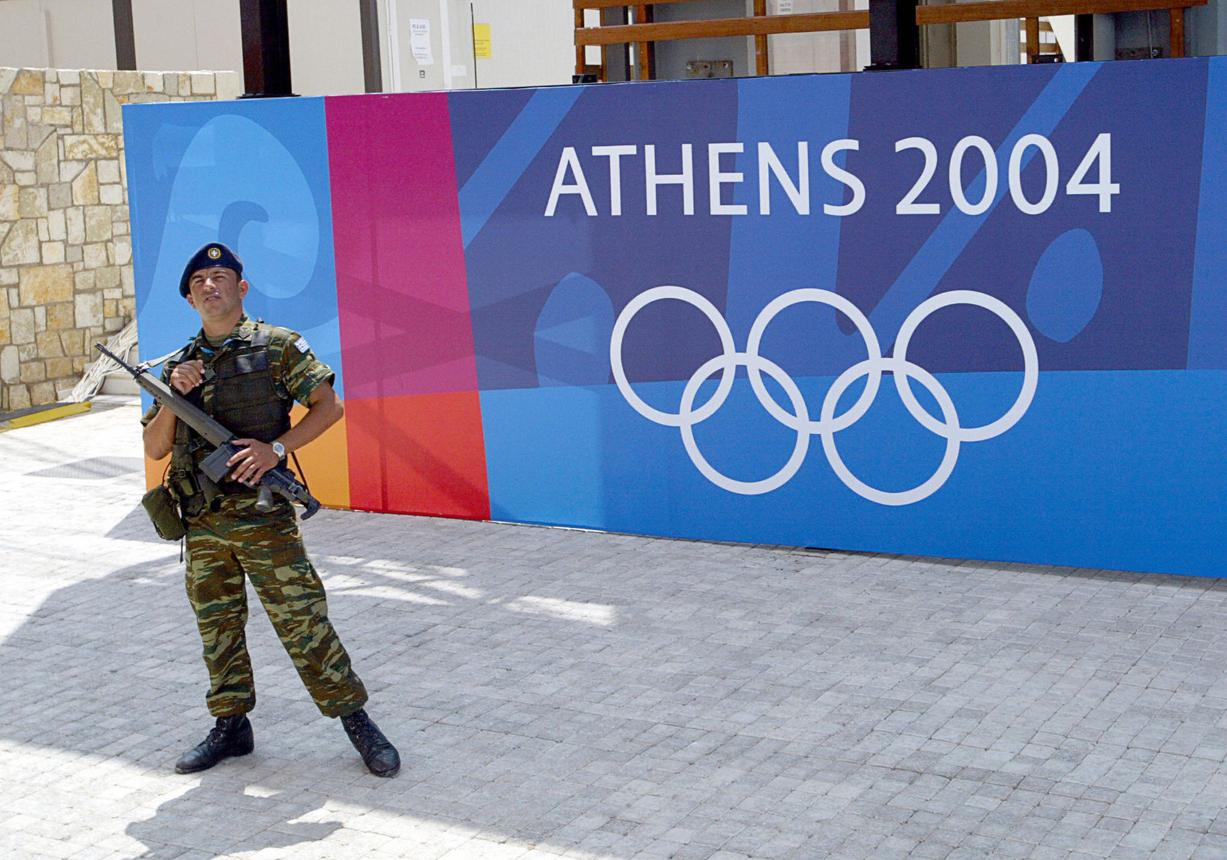
The Greek government responded with an unprecedented expansion of Olympic security.
The 9/11 attacks also brought international attention to the fact that Greece had been dealing with the terrorist organization 17N for decades.
Then, in June 2002, Greek authorities arrested Savvas Xiros, a member of 17N, after he was accidentally injured while preparing a bomb in Piraeus.
His arrest ultimately led to the dismantling of much of 17N.
Greece’s counterterrorism landscape was changing dramatically at exactly the same time that international terrorism was becoming a central concern.
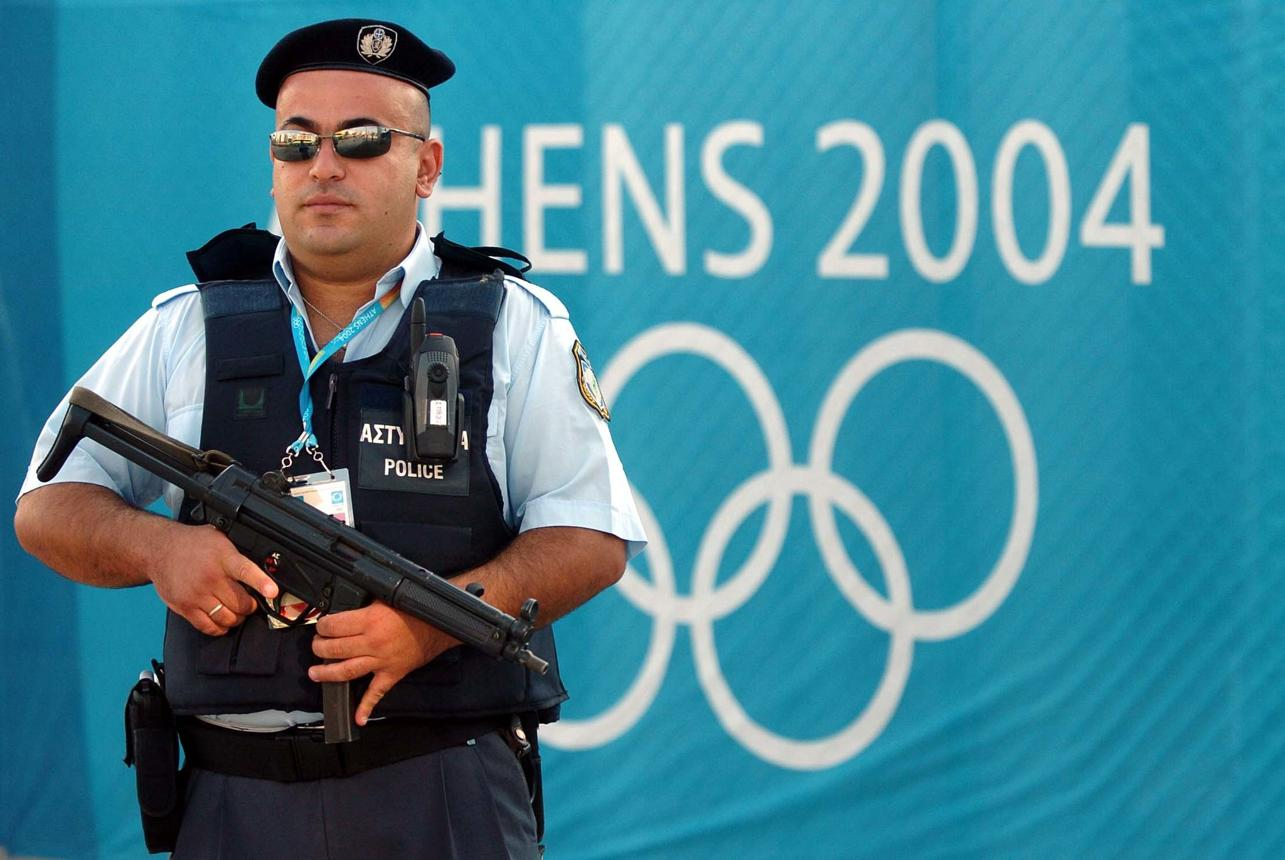
Greece spent roughly €1 billion on Olympic security.
The operation involved:
- Greek police
- military forces
- coast guard
- intelligence services
- firefighters
- special forces
- NATO cooperation
- foreign intelligence agencies
- extensive surveillance
- thousands of security cameras
- helicopters
- patrol boats
- airspace restrictions
- protection of Olympic venues
- protection of hotels and transportation
There was even a NATO air-defense component associated with protecting the Games.
For Greece, this represented a remarkable transformation.
A country that had historically spent relatively little on domestic security suddenly had to build a sophisticated, multinational security operation almost from scratch.
And it had to do it in just three years.
The Airport Changed
Athens International Airport had opened in 2001, just months before 9/11.
The new airport had been designed for the modern era, but after September 11, aviation security requirements changed dramatically.
Greek airports subsequently adopted increasingly sophisticated:
- passenger screening
- baggage screening
- explosive detection
- restricted-area controls
- staff identification
- airport-access controls
- international passenger databases
And because Greece is part of the EU and the Schengen Area, Greek aviation security increasingly became integrated into European security standards.
So when you fly out of Athens today, you are experiencing the combined legacy of:
9/11 → EU aviation regulations → the Athens Olympics → continuing terrorist threats.
Greece and America: A Complicated Relationship
The relationship between Greece and the United States became even more complicated.
There was already significant anti-American sentiment in Greece, partly because of American involvement in Greek affairs during the Cold War and, especially, the perception of U.S. support for the Greek military junta.
After 9/11, the American government wanted stronger Greek cooperation in the fight against terrorism.
Greece cooperated.
But there was also significant Greek public opposition to the American War on Terror, particularly the invasion of Iraq in 2003.
Greece was one of the European countries where opposition to the Iraq War was especially strong.
There were enormous demonstrations in Athens.
So Greece found itself in a complicated position: cooperating with the United States and its allies on counterterrorism while much of the Greek public strongly opposed the direction American foreign policy was taking.
From Terrorism to Border Security
The Syrian war and the subsequent refugee crisis brought millions of people toward Europe beginning in 2011.
Greece became one of the principal entry points.
The Greek islands—particularly Lesbos, Chios, Samos, Kos and Rhodes—became important points along migration routes.
This created an extremely sensitive security problem:
How do you maintain humanitarian obligations while identifying people who might pose a security threat?
The overwhelming majority of refugees and migrants were, of course, not terrorists.
But European governments nevertheless became much more focused on:
- biometric identification
- fingerprints
- databases
- document verification
- border surveillance
- intelligence sharing
The post-9/11 security philosophy therefore became part of Greece’s modern border-management system as well.
Did Greece Become Safer?
The 2004 Olympics passed without a major terrorist attack—a remarkable achievement considering the enormous number of people and the international attention concentrated in Athens.
Greece dismantled 17N.
International intelligence cooperation became dramatically stronger.
Airport security became much more sophisticated.
And Greece became much better equipped to deal with large-scale terrorist threats.
Greece had gone from having a relatively low-profile security environment to hosting one of the most security-sensitive events on Earth in only three years.
And it succeeded.
The World After 9/11
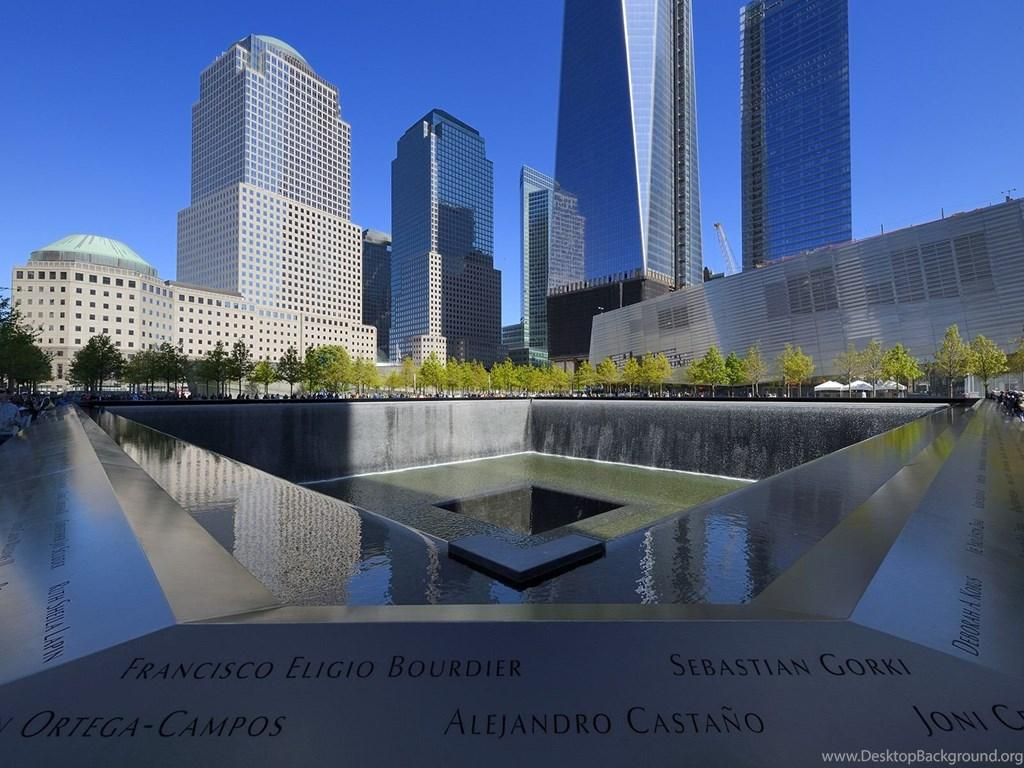
The September 11 attacks killed nearly 3,000 people.
But the consequences affected hundreds of millions of people worldwide for decades.
Aviation security in 2001 was primarily designed to prevent bombs and conventional weapons from getting onto an airplane.
There were metal detectors and X-ray machines, but screening was often conducted by private contractors hired by individual airlines. The system had serious weaknesses.
Authorities largely assumed that if someone hijacked an airplane, the objective would be to take control of it and negotiate.
The possibility that hijackers would deliberately crash aircraft into buildings, killing themselves and everyone aboard, was not built into the security system.
Then everything changed.
The Cockpit Changed Dramatically
This may be one of the most important—and least visible—changes.
Before 9/11, cockpit doors were not designed to withstand a determined physical assault.
Afterward:
- cockpit doors were reinforced
- they were made substantially more resistant to forced entry
- pilots were given procedures for securing the cockpit
- access to the cockpit became extraordinarily restricted
- Federal Air Marshals were expanded
- armed Federal Flight Deck Officers were introduced
The cockpit was transformed from a relatively accessible part of the aircraft into a highly protected security zone.
Checked Baggage Was Screened for Explosives
Before 9/11, checked luggage was not universally subjected to today’s level of explosive detection.
Afterward, the government required comprehensive explosive screening of checked baggage.
That was a huge change.
Security shifted toward assuming that a bomb could be concealed in luggage, rather than relying primarily on passenger screening.
Passenger Screening Became Comprehensive
Today’s passenger encounters a security system that is dramatically different from the one the 19 hijackers encountered.
Modern systems can involve:
- identity verification
- watch-list screening
- metal detectors
- advanced imaging technology
- explosive-detection technology
- baggage screening
- canine teams
- additional screening for selected passengers
- increasingly sophisticated biometric and identity systems
The objective is no longer simply:
“Does this person have a gun?”
It is closer to:
“Is this person, this luggage, or this behavior associated with a potential security threat?”
That represents a major conceptual change.
And then came the liquids, shoes and belts.
The Shoe Bomber
After the attempted “shoe bombing” in December 2001, passengers in many countries began being required to remove their shoes during security screening.
Then came the liquids.
After the 2006 transatlantic aircraft bombing plot was disrupted, restrictions on liquids became much more stringent.
Hence the famous 100 ml / 3.4-ounce rule and the clear plastic bag.
Laptops and Electronics
Large electronic devices became an additional concern because explosives can potentially be concealed within electronic equipment.
Security technology subsequently evolved to allow better examination of electronics without necessarily requiring every device to be treated identically.
The security line had become something entirely different from what it had been before 9/11.
Intelligence
The CIA, FBI, NSA, Department of Homeland Security and other agencies dramatically expanded counterterrorism operations and information sharing.
Information that might once have remained inside separate agencies increasingly had to be shared.
The goal was to connect the dots before an attack occurred.
Border Security
The United States became much more focused on who was entering the country.
Identity documents, immigration databases, watch lists and border screening became central components of national security.
The question was no longer simply:
“Who are you?”
It became:
“Who are you, where have you been, and do we know anything about you that could indicate a security threat?”
Surveillance
Government surveillance capabilities expanded enormously, particularly after the USA PATRIOT Act.
This remains one of the most controversial legacies of 9/11.
The United States gained new tools for identifying and tracking potential terrorists.
But it also created a fundamental debate:
How much privacy should a free society surrender in exchange for security?
That question has never really gone away.
Military Policy
The United States invaded Afghanistan in October 2001 and Iraq in 2003.
The War on Terror became a defining feature of American foreign policy for the next two decades.
It consumed enormous financial resources, cost thousands of American military lives, and affected millions of people in the countries where the wars were fought.
The consequences continue to shape international politics today.
International Cooperation
And this wasn’t just an American phenomenon.
Countries around the world began sharing intelligence and coordinating counterterrorism operations at a level that had previously been far less common.
The International Civil Aviation Organization (ICAO) strengthened the global aviation-security framework following 9/11, including security oversight and international standards for protecting civil aviation.
The world had learned that terrorism was no longer simply a domestic problem.
An attack could be planned in one country, financed in another, organized through a third, and carried out thousands of miles away.
Are We Safer?
It would be extraordinarily difficult today for 19 people to:
- board four commercial aircraft with weapons,
- overpower four flight crews,
- take control of four aircraft,
- keep the cockpits accessible,
- and use those aircraft as guided missiles.
The security architecture has been fundamentally redesigned around preventing precisely that kind of attack.
So, in that very specific sense, yes—we are safer.
But terrorists adapt.
Security systems tend to become stronger against yesterday’s attack.
After 9/11, terrorists attempted other approaches:
- shoe bombs
- liquid explosives
- underwear explosives
- attacks in airports rather than airplanes
- attacks on airport terminals
- attacks on trains
- attacks on public gatherings
- vehicle attacks
- cyberattacks
So the question isn’t really:
“Can another 9/11 happen?”
The better question is:
“Can terrorists find another vulnerability?”
And the answer will always be:
Yes, potentially.
That is why modern aviation and national security increasingly emphasize intelligence, information sharing, identity assessment, cybersecurity, biometrics, cargo security and emerging technologies—not simply making passengers stand in line and take off their shoes.
What Did We Gain?
After 25 years, there are undeniable gains:
✔ Stronger aviation security
✔ Stronger intelligence sharing
✔ Better protection of aircraft
✔ Better explosive detection
✔ Stronger international counterterrorism cooperation
✔ More sophisticated border security
✔ Greater ability to identify and disrupt terrorist networks
But we also accepted a price:
✘ More government surveillance
✘ Greater collection of personal information
✘ Expanded government powers
✘ Longer airport procedures
✘ Greater inconvenience for ordinary travelers
✘ Concerns about racial and religious profiling
✘ Continuing questions about civil liberties
✘ Enormous military and financial cost
Twenty-Five Years Later
If you had gone to bed on September 10, 2001, and someone had told you:
“Twenty-five years from now, America will create a new Cabinet department combining 22 agencies, federalize airport security, spend decades fighting wars in Afghanistan and Iraq, dramatically expand intelligence-sharing and surveillance, fundamentally redesign commercial aviation security, and make terrorism a central organizing principle of national security—and these changes will spread across the entire globe, with countries like Greece working cooperatively within this new security architecture…”
You probably would have thought that person was describing an alternate reality.
And yet, here we are.
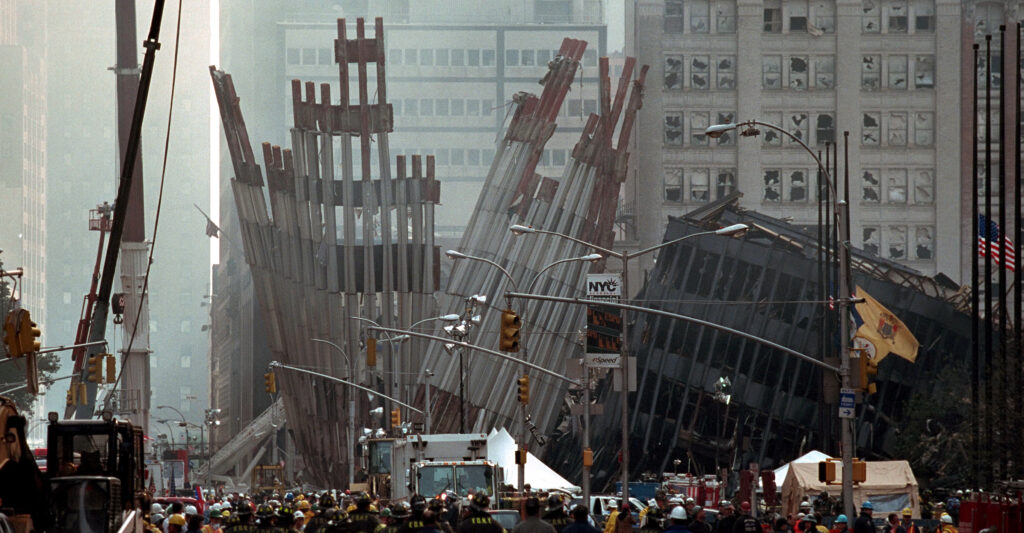
Twenty-five years later, we live in a world shaped by a Tuesday morning in September 2001.
The airport security line is different.
The cockpit door is different.
The way governments share information is different.
The way countries monitor borders is different.
The way we think about terrorism is different.
The relationship between citizens and government is different.
And even something as ordinary as putting a bottle of water into your carry-on luggage is a reminder that the world we live in today is not the world we lived in on September 10, 2001.
So, are we substantially safer?
Probably, in many very specific ways.
But safer does not necessarily mean safe.
And the question that remains is not only what we gained, but what we gave up along the way.
How much security is enough?
How much freedom are we willing to exchange for it?
And at what point does protecting a free society begin to change the very society we are trying to protect?
Twenty-five years later, those questions remain unanswered.
What we do know is that September 11, 2001, did not end when the towers fell.
It changed the world.
It changed America.
It changed Europe.
It changed Greece.
And it changed all of us who watched it happen in real time.
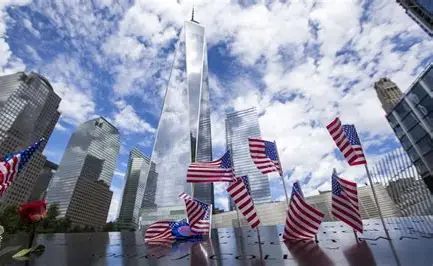
May we never forget.
September 11, 2001


Leave a Reply