

It is rare that I get hung up on a song.
The first time I heard “Asteromata” my hair stood on end.
I was overwhelmed by melancholy.
I have listened and watched “Asteromata” at least 100 times since.
These last 10 days I have been filled with great pride for Greece and simultaneously haunted by the nation’s entry in the 2025 Eurovision song competition in Basel Switzerland.
Bravo to Klavdia, a 22-year-old, who looks like a Nana Mouskouri clone, with a voice that has emotional depth and technical prowess.

It has been almost two decades since I got excited about a Eurovision song.
The last time I actually paid any attention to the contest was when Elena Paparizou brought home victory for Greece in 2005 with the song “My Number One.” Her performance featured traditional Greek Pontian Dance as well as a highly choreographed stage show. The song received 230 points including the maximum 12 from 10 countries, securing Greece’s first ever victory.
But this song–Asteromata–and Klavdia’s rendition of it, was poetry.
Klavdia’s has the ability to convey profound emotion through her voice, creating a captivating and haunting experience.
The song, a Balkan ballad performed in Greek, begins with Klavdia’s pure a cappella vocals, gradually building with instrumental layers that include keyboards, drums, synthesizers and wind instruments. Her warm voice and impressive vocal runs enhance the song’s cinematic quality, allowing listeners to feel the story deeply, even without understanding the language.

The promotional video of the song ran with English subtitles. You can view it here.
The Eurovision performance did not use the subtitles and at first I was a bit miffed. I feared the audience would miss the themes of being uprooted from home, living in a forced exile. And yet, the pain, the heart break was conveyed by Klavdia through her performance.
What is Asteromata about?
The song delves into themes of displacement and resilience, drawing inspiration from the experiences of Greek refugees and the enduring connection to their homeland. It has been described as a metaphorical dialogue between a mother and her missing child, conveying messages of hope and remembrance.
The poignant ballad was co-written by Klavdia and the production team Arcade. This tender young woman, through her sublime voice, the awesome power of her soul, gave wings to her lyrics. She lifted the words so high that they touched the soul of every Greek who has been far from home.

Watch Asteromata as performed on Saturday, May 17.
The lyrics of Asteromata (Starry-Eyed Girl) in English:
My star, my star
My sweet mother, don’t you cry
Even if they dress you in black
My faded body
Flames cannot defeat it
The swallows of fire
Even if they cross the seas
The soil of their roots
They never forget
My little starry-eyed girl
Lean so I can kiss you
In your sacred tears
To wipe my lips
My little starry-eyed girl
Lean to me so I can hold you
My forgotten wings
To rest at last
Ah, my star, my treasure
My sweet mother, don’t you cry
My life is a ship
Searching for its return
The wind is my sail
My little starry-eyed girl
Lean to me so I can hold you
My forgotten wings
To rest at last
Ah, my star, my treasure
Ah, my star, my treasure
My star.

The competition was no longer important
“Asteromata” transcended the competition.
There was no longer a contest–there was only overwhelming emotion and pride for Greece. In three minutes Klavdia conveyed the tragedy of genocide, exile and the eternal hope of coming home again.
Klavdia, aka Klavdia Papadopoulou from Aspropyrgos, who has Pontic Greek heritage, drew inspiration from her family’s history of forced migration. Her grandmother was exiled to the Soviet Union, and her parents were born there before returning to Greece in 1991. The song serves as a tribute to those who have been uprooted from their homelands, reflecting on the pain of exile and the enduring hope for return.
Klavdia’s unique voice doesn’t just sing; it tells a story, creating a vibration that resonates with the audience. The lyrics of “Asteromata” are rich with symbolism.

Mother’s Mourning: The opening lines address a grieving mother, symbolizing the collective sorrow of those left behind.
Swallows of Fire: This metaphor represents migratory birds crossing seas, evoking the journeys of refugees who, despite displacement, never forget their roots.
Starry-Eyed Child: The term “Asteromata” itself refers to a child with starry eyes, symbolizing innocence and the longing for a lost homeland.
Ship Seeking Return: The song compares life to a ship searching for its way back home, highlighting the perpetual quest for belonging.
“Asteromata” resonates with current global issues of migration and displacement. The song speaks to anyone who has experienced the loss of home and loved ones, making it universally relatable.
Pontian Genocide and Exile
Inspired by the Pontian genocide and exile, it is a powerful artistic expression of collective memory, identity and the universal human experience of seeking home and belonging.
Pontic Greeks are an ethnic Greek group historically rooted in the Pontus region, along the southern coast of the Black Sea—mainly in what is now northeastern Turkey.
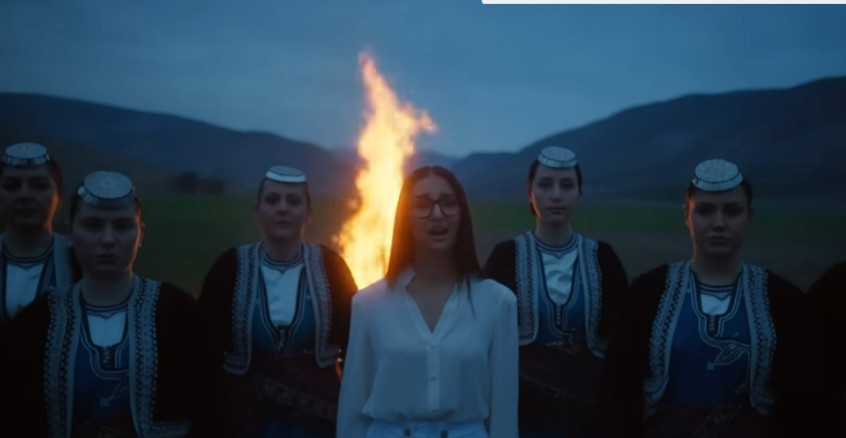
They have lived in the area since ancient times, dating back to Greek colonization around the 8th century BCE. They developed a distinct culture, language (Pontic Greek), music, and traditions over centuries, often in relative isolation.
The early 20th century was marked by widespread violence and forced migration:
From 1914–1923 Pontic Greeks suffered massacres, forced marches, and deportations in what is now recognized by some historians as part of the Greek Genocide.
An estimated 350,000 Pontic Greeks were killed or displaced. In 1923 The Treaty of Lausanne enforced a population exchange between Greece and Turkey. Around 1.2 million Anatolian Greeks, including surviving Pontic Greeks, were forced to leave Turkey and resettle in Greece.
Today it’s Gaza and Ukraine
Today we all bare witness to the genocide that is taking place to the East with Gaza and Israel and to the North with Ukraine and Russia. Five decades ago, half of Cyprus fell under Turkish occupation.
Forced migration is painful and heart breaking. And yet, we all have developed such a thick skin and dismiss stories of human suffering and loss of home as just another sound byte. Songs such as “Asteromata” are passionate reminders that human displacement is not just a news blip.
Perhaps Eurovision 2025 and “Asteromata” will create greater empathy and compassion for our fellow humans who are refugees and migrants?

Eurovision was created to help nations bond
Founded in 1956 by the European Broadcasting Union, the contest’s purpose was bringing countries together for a live music competition. Initially there were 7 countries that competed; today there are 40 including Israel and Australia.
Each participating country submits a song (original, under 3 minutes), performed live and voted on by other countries. The country with the highest combined jury and televote score wins. While many Eurovision winners fade into obscurity, the contest has occasionally served as a major springboard for international stardom. ABBA is one such group. Celine Dion won the contest for Switzerland in 1988.
Eurovision has become an important platform for both harmonic bonding through music as well as a ladder to fame and success for artists who compete.

The last few years, the competition has been “out there” in terms of extremes and unusual performances. Perhaps purposefully so–the strangest and most unusual hoping to attract alot of attention and garner the greatest number of votes.
Klavdia brought “Asteromata” in with 231 points to secure 6th place in the grand finale. I hope this talented young woman is able to cast light on the plight of refugees and migrants through her Eurovision performance.
What’s next for Klavdia?
Klavdia rose to prominence through her participation in talent shows like Greece’s Got Talent and The Voice of Greece, where she was mentored by none other than Elena Paparizou! She later built a strong online presence, amassing over 200,000 followers on TikTok. She released several successful singles, including “Haramata,” “Vasanizomai,” and “Lonely Heart,” the latter topping the Shazam Discovery List. Her musical style blends indie pop with traditional Greek elements, often exploring themes of love, loss and identity.

I know Klavdia’s world will certainly change following her Eurovision performance.
But I hope to god Klavdia will change the world because of “Asteromata.”
If Bob Dylan could create an anthem for the civil rights movement with “Blowin In the Wind,” I want to believe that Klavdia can inspire a generation to recognize injustice through peaceful activism.

 Stacey Seaside
Leave a reply to Anonymous Cancel reply