
May Day
A cry for help
A floral bouquet
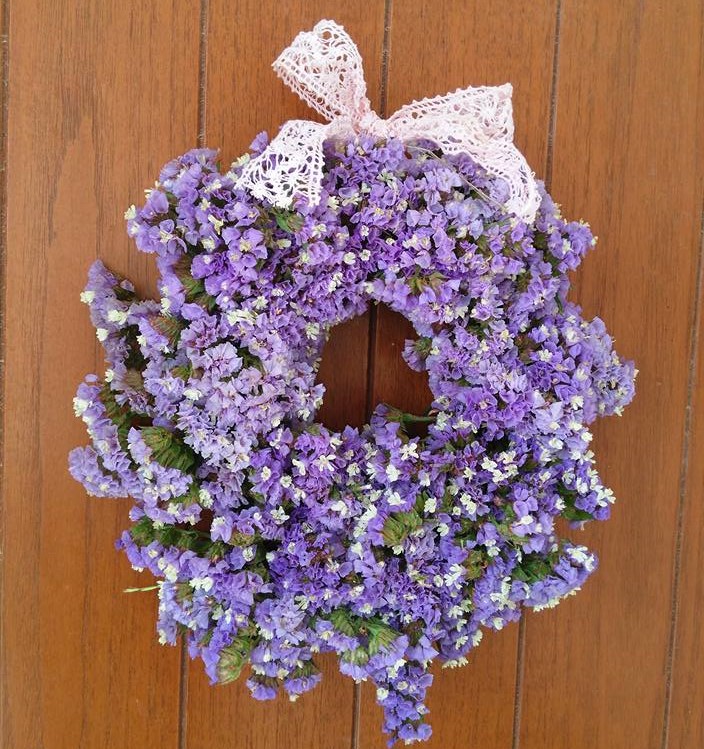
A wreath of flowers
A labour movement
May Day conjures all these images.
I never appreciated May Day until I came to Greece.
May Day– Protomagia
Here we celebrate Protomagia–May Day.
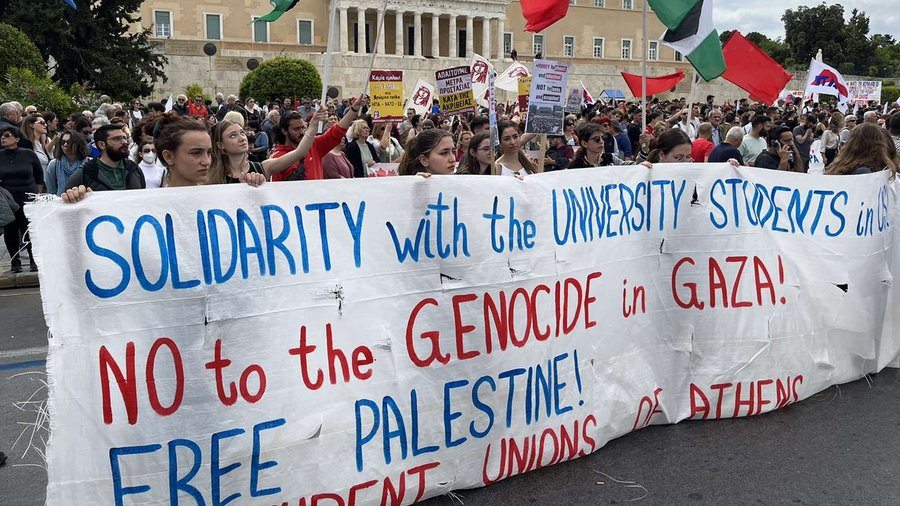
Both a celebration of nature with many destined for the countryside on this bank holiday; others, taking to urban streets, to demonstrate in support of all who work–labourers.
Known as International Workers’ Day, May Day is significant in Greece for demonstrations, protests, and rallies. Unions often organize strikes and protests on this day to advocate for workers’ rights, better working conditions, and issues of social justice. Strikes impact transportation, public services, and education. Wednesday the country was paralyzed with train, boat and bus strikes.
Although striking is a vehicle to voice concerns and demand change from the government and employers, because there are so many, so often, most observers in Greece have become immune and desensitized.
As an American, I did not think much about why I was getting a 3-day weekend on the first Monday of every September. Labour Day, the parallel but not the same celebration of May Day. is the last hurrah of Summer in North America as folks picnic around the country and enjoy the last bits of warm weather.

Although May Day in Greece and Labour Day in the USA use the day to honour the men and women who are the backbone of industry they are different in practice.
My May Day
On a personal level, there is something so ethereal about May Day for me here in Mykonos. Many decades ago, a dear friend took me into the fields to collect Provasia, the statis flowers with purple blossoms, so we could make our May wreaths. It is a tradition I have held because of the oneness with nature in this simple act. Views of the sea surrounding us, open fields of all kinds of wild flora and fauna– a beautiful symphony of natural growth and THE HOPE of what may be in each bloom.
My first May Day in Greece I barely noticed. I heard there was a strike in Athens and the streets were filled with demonstrations. Schools and banks were closed in Mykonos.
The second spring, Anna invited me to come with her to pick flowers and make a May wreath. Anna, lost to us after a horrific bout with COVID, understood me so well. Although she had grown up in Mykonos, she had spent her adult years in Athens. When her husband had the opportunity to transfer to the air force station in Mykonos, they moved back to the island, to raise their two children away from the large Metropolis of Piraeus.
Anna “got me.” She knew what it was like to start fresh in a place that although not new, was now unfamiliar. So she took me under her wing and helped me navigate much of Mykonian culture and custom.
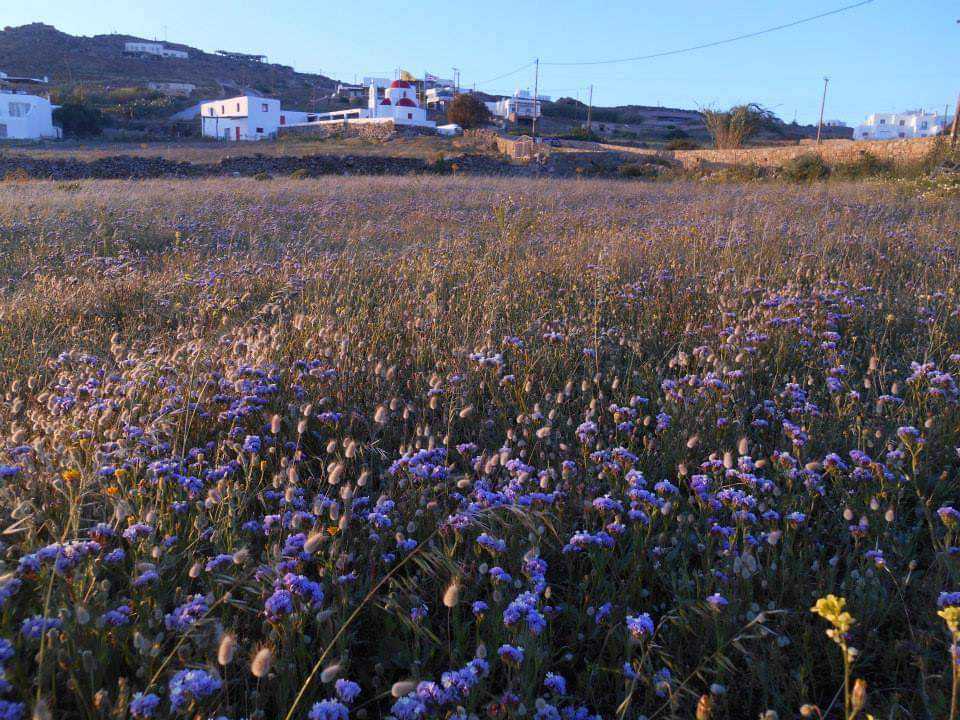
On that afternoon of the first day of May, we drove out to Aleomandra, also known today as the residential complex, Costa Ilios. She showed me the Provasia flowers. Stiff stems with a tiny but tough purple blossom, fan out from a base of oblong leaves in the dryest soil imaginable.
When fresh sprouts come out with the first autumn rains, you will find plenty of folks walking the fields to cut the green oblong leaves and boil them as greens–xorta. Unharvested, these plants produce the long-stemmed purple flower.
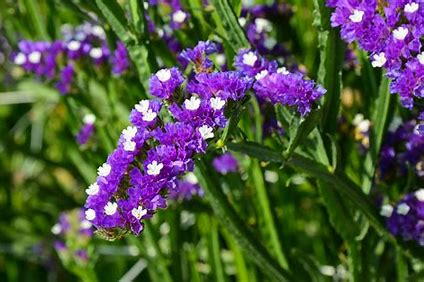

We set off across the field cutting the flowers from the base of the stem. At this distance to the ground, you really do get up close and personal with nature. You notice the bugs that inhabit the plants; you take note of the other plant life surrounding your bounty. My hands were not used to pulling and prodding from the soil. My hands became stained with green and brown. I had to watch myself around the many thistle plants so as not to impale my fingers with painful thorns.
When we had filled our baskets we made our way back to the car. We returned to Anna’s kitchen. She pulled out scissors and twine, made us coffee and we set to work. She gathered bunches of the flowers and wound the twine tight around the buds; she gathered another bunch just below the first and wrapped the twine tight around them. She proceeded like this until satisfied with the length, she wrapped the end of the stem just below the initial buds she had bound with twine.
She twisted and turned the blooms so they faced forward in a perfect circle. Rummaging through a draw she found several ribbons in lavender, white and crimsons. Anna tied the ribbon around the wreath to create a hanger loop and bow.
Now it was my turn. My first attempt was a very sad looking skinny wreath. Nonetheless I was enamoured with the entire experience. I had made my own “Mai-i.” That gave me immense pleasure. It had been wonderful to be out in the fields so close to the earth. The wind, the warmth of the sun, the smell of the dried earth, the physicality of bending and pulling–that was what my Mykonian May Day was to be about today and for as long as I could after that.
Mark Your Calendars
Each spring, I would note May Day on the calendar and organize my schedule to block out an afternoon one or two days before May Day. When my boys were young, I would take them with. Sometimes I would ask friends to join me.

Mostly I go alone, usually to Ftelia Beach to gather the dried purple flowers; I enjoy the afternoon spent trekking through the bramble, the poppies, the camomile and of course the sand. I am alone with my thoughts and the earth there. The air is heavy with smell of salt from the sea and dried grass. Arid and earthy this valley that meets the sea is a rugged wilderness on the island. The scattered explosion of vibrant colors is in total contrast to the sun-baked brown fauna. In this setting I can’t help but marvel at the blossoming flora bursting with vitality.
The solitary experience was almost religious in the rite of gathering the flowers and assembling the wreaths and bouquets in my kitchen or on nice days, out on the veranda. I make wreaths for the store, for the house and for friends. Sadly for 3 years running, I have also made bouquets for the graves of dear ones who have passed.

I only missed the rite of making my “Mai-i” twice in four decades. The two years I was in Athens I bought wreaths from the florist. And although the floral circles were composed of statis flowers in many colors, it just felt quite melancholy to have bought a wreath instead of making my own.
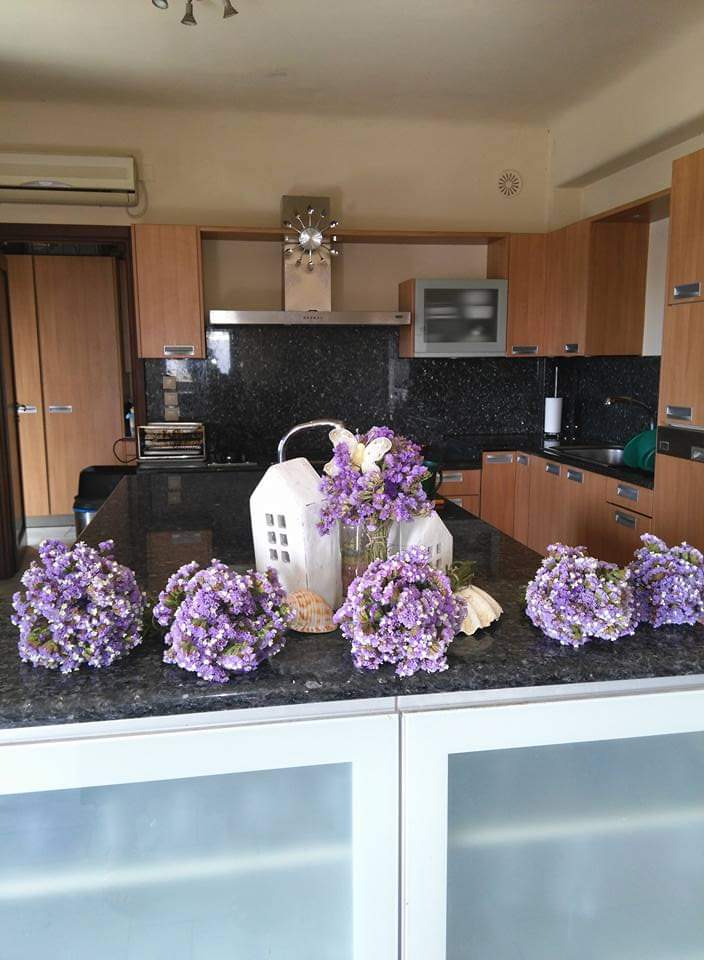
This year, as in other years, the Mykonian Women’s Cultural Organization was selling wreaths of statis as well as other floral arrangements days before the celebration. I always make a point of buying a few wreaths to support their philanthropic efforts as well as making my own wreaths and bouquets to gift to gal pals and my beau.
Mykonian May Day Customs
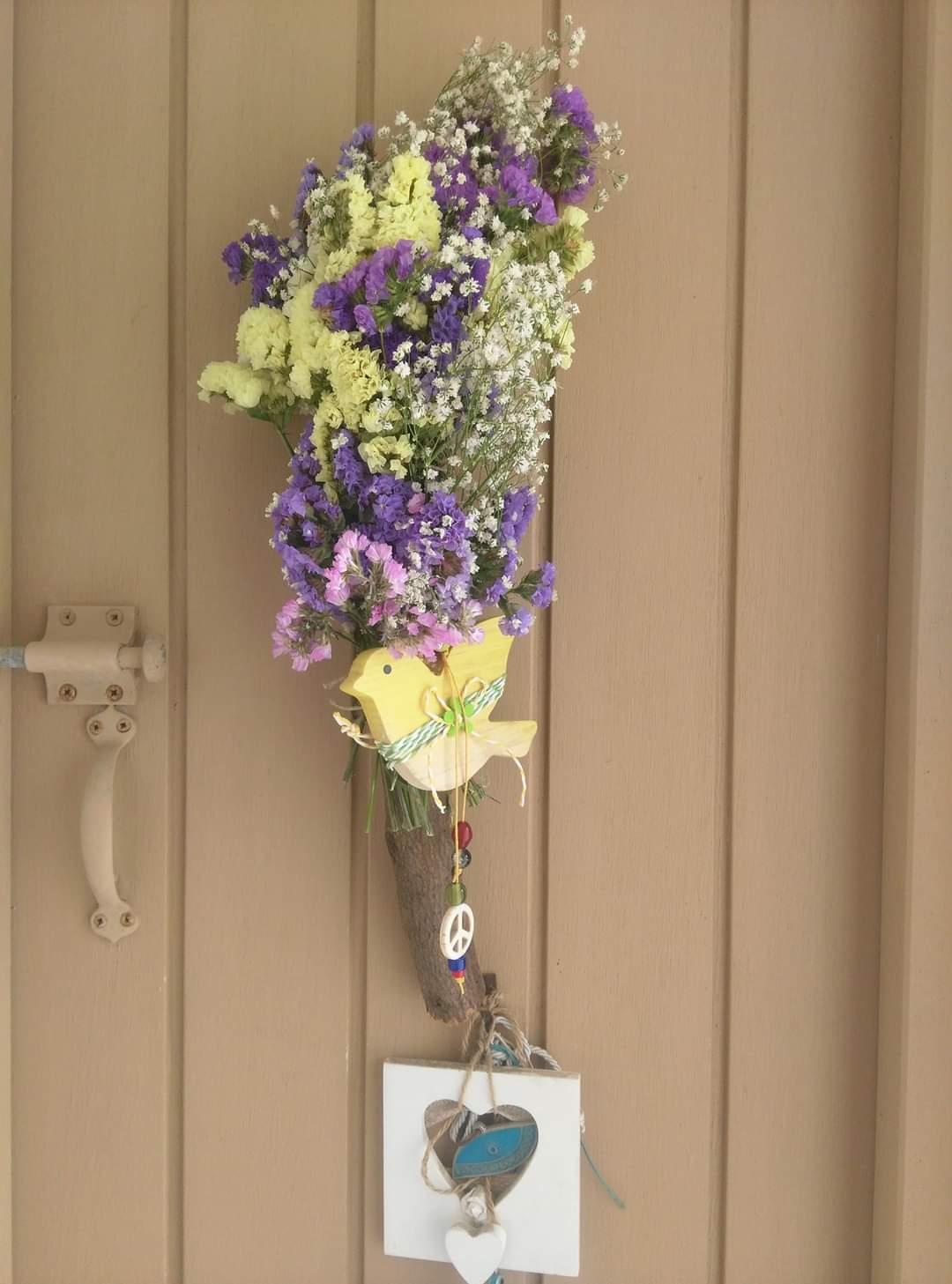
And speaking of beaus, in Mykonos in years past and still today, secret male admirers drop off bouquets and floral wreaths on the doorsteps of girls who have captured their hearts. (The daughter of a friend found 17 items: bouquets, potted plants and wreaths on her doorstep one May Day!)
It is also part of the fun of Mykonian custom to steal the wreath from someone’s threshold. I have been a victim of this custom and finally learned to hang my wreath high enough so sticky fingers could not reach it. This year, I was once again the victim–not only of the fresh Mai-i, but also two other wreaths that adorn the outside entry!! (The trespassers and thieves forgot that nowadays there are security cameras!!)
May Day is Greek!
May and May Day have deep Greek roots.
Maios (Μάιος in Greek), the month of May, derives its name from the ancient goddess Maia (in Greek Μαία, the mother, the midwife, she who helps to give birth.) Maia was the Greek goddess of fertility.
In antiquity, the first day of May celebrated the arrival of summer after a long harsh winter. It was also a celebration of life over death.
Why is it May Day in Europe but Labour Day in the States?
Aside from being a beautiful feast of flowers, rejuvenation and renewal, the working man owes this day to the sacrifices made to insure decent working conditions for a decent wage.
It was only upon moving to Greece that I learned that there was quite a bit of fuss that surrounded the first of May. It was an official public holiday and at some point when it would fall on a Saturday or Sunday employees were miffed and would strike if the government didn’t transfer the holiday to a weekday so that workers would get the day off.
I learned that May Day paralleled the Labour Day holiday in celebrating the worker but May Day was exclusive to the employed, while the September holiday is enjoyed by all–workers and management.

The designation of Labour Day on the first Monday in September is attributed to the Haymarket Riot/Massacre of 1886 in Chicago. A group of labour organizers were peacefully demonstrating for an eight-hour day. An anarchist threw a bomb in to the crowd, which killed a policeman, the police killed several demonstrators and some policemen. The powers that be arrested the labour leaders. In the rest of the world, May First was selected as a day for international celebration of the working man, no matter what day of the week it fell on.
So Wednesday, May 1 the islands were without boat service and the mainland without trains and bus service. And there was a rally at Syntagma, in the heart of the Greek capitol.
All the best on May Day!
No boats also meant less traffic in Mykonos at peak times. So Wednesday I could thoroughly enjoy driving to the fields, taking in the vistas, hiking through the dirt to gather flowers. The entire process– nature up close, with dust and dirt on your hands, from the buds as you weave to the dry scents of the fields, fills the senses of sight, smell and touch.
Kai Tou Chronou!!! (And to next year!)
May we be well enough to walk the fields, gather the flowers and create bouquets and wreaths to be displayed through the summer.
A homage to the Mykonian Earth!!!
Hoping May Day offers you the inspiration to grow, to try something new, to be all you can.


 Stacey Seaside
Leave a comment