
I am traveling back to the US in a few days.
This is the first time when going home has overwhelmed me with a true sense of dread and anxiety.
Not because of the reunions that I will have with dear ones but because home-my country, is in chaos.
Each day fellow Americans are waking up and not knowing what their futures — once steady and stable — will be in the next few weeks. The fear ranges from lifestyle choices, career paths, income levels and living with the loss of law. As I am drafting this blog, POTUS has called himself “King,” and described a democratically elected president of a country invaded by a Russian strongman a dictator.

People who were the bastions of stability in the system are being purged and now the entire country lives or dies by the whims of a few appointees willing to bow to a self-appointed monarch.
Systems that have been in place for centuries are being deleted because the guy at the top has no respect for the gravitas of the office and the oath he took to protect the constitution. Suddenly we have folks saying that the three branches of US government are not equal–the executive branch has greater authority than the judiciary or the legislative branch.
Dare I say how Republicans would act if the situation were reversed: Democrats holding the majority of all branches and happily submitting to the office of the presidency functioning as a monarch, carrying out his own whims and desires?
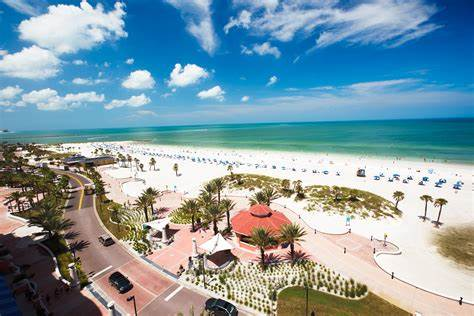
I am a week away from Florida and DC and although excited to reconnect with family and friends and colleagues, a feeling of dread and fear continues to shadow the entire journey.
I truly fear it will be my last time going “home” until at least 2029—sounds so Orwellian–but I think the changes that are coming, no matter how much we “Resist,” with civil disobedience, many fights for individual rights and rule of law will be lost.
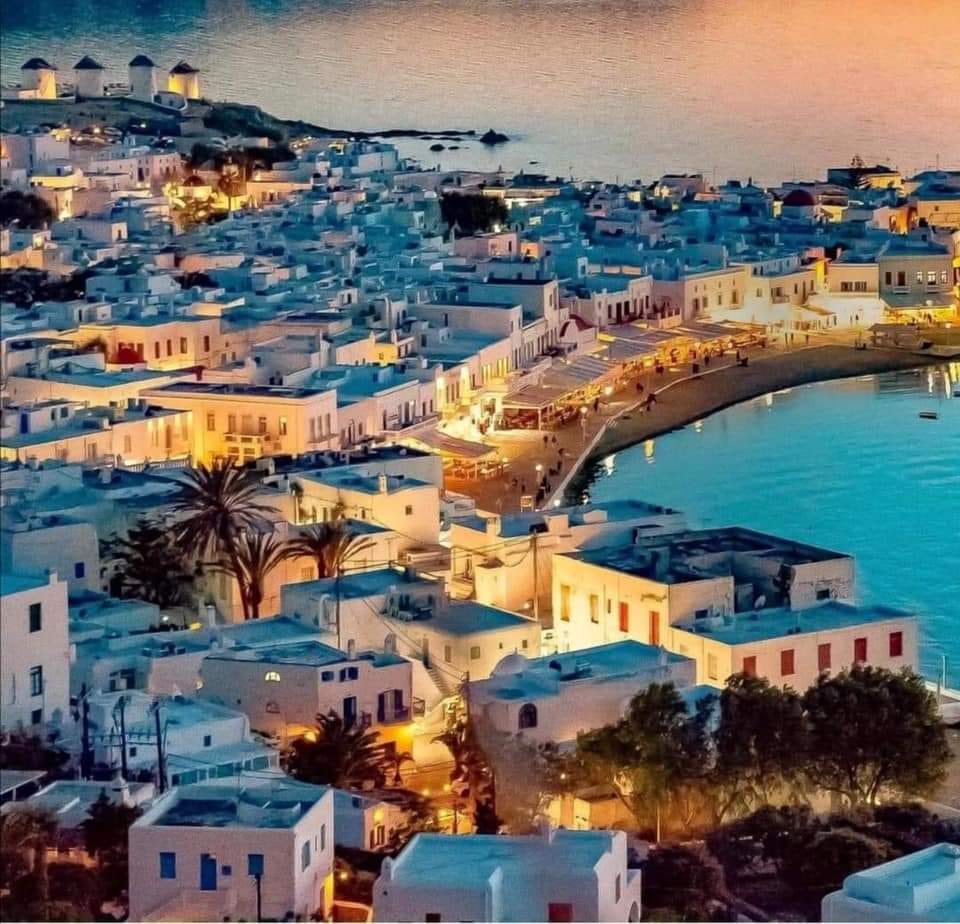
Politics aside, several years back my youngest son complained to me that when I referred to “home,” I wasn’t taking about our family home in Mykonos. He noted that I always used the word to talk about the US and wherever my extended family was at the time.
“Aren’t we your home, Mom?”
It broke my heart to hear him say that.
After all, I had built a life away from “home” with his father and brother on a beautiful Greek island in the Aegean that my family has deep roots in. And yet, when I thought of home, I remembered my childhood home—and the emotions that thrust me back to the days of my youth.
When I think of home the image of a red brick building and the period of 1967 to 1972 are the first tug on my emotional memory. From the age 7 to 17 this was home: 109 S. Hunter Avenue in Joliet, a town mostly known for the prison, Stateville, and not as a Chicago suburb.

We moved from a single family ranch in a post WWII subdivision to this three story that dated back to the 1920s. Located just behind Saint Patrick’s Cathedral and school, we were surrounded by Irish-Catholic neighbors. The block was lined with the O’Donnell’s, the Maher’s and the Shea’s with 7 to 9 siblings each.

All of us attended school at St. Pat’s. With the playground literally in our backyard it was just convenient. The convent of nuns living around the corner and the Monsignor’s residence added to the ethnicity of the neighborhood.
This was “home” for me for 2 decades. Although I went off to university and worked in other towns, this was the “home” I left behind when I moved to Greece.
My parents eventually moved to another side of town, back to a sprawling single family ranch so they no longer had to deal with stairs as they aged. And my father relocated altogether after my Mom passed, first to a condo and then permanently to another ranch with a pool in Florida.
All of these places I associate as “home,” because of the people who lived there and the moments in time they are attached to. The destination of the journey “home” this trip is to my brother and sister-in-law’s. A four-story town house on the water in Florida ready to welcome guests regularly. They have hosted me annually and occasionally my son’s and my friends. They always make me feel very much welcome and very much “at home” there.
These annual journeys have been my own “nostos.” Nostos (νόστος) is an ancient Greek word meaning “homecoming” or “return journey.” It often refers to the theme in Greek literature, especially in epic poetry, of a hero’s return home after a long and challenging journey. The most famous example is The Odyssey by Homer, which tells the story of Odysseus’ difficult journey back to Ithaca after the Trojan War.
In literature, mythology, and real life, homecomings symbolize personal growth. The hero departs, faces struggles, and returns transformed. Our own homecomings—whether after a long journey, a phase of life, or even just a workday—reflect that cyclical journey of departure and return.
Homecomings matter because they help us understand who we are, where we come from, and what still holds meaning in our lives. They’re a test of whether we can truly go back—physically, emotionally, or spiritually.
In a broader sense, nostos can symbolize longing for home, nostalgia, or the emotional and transformative experience of returning to one’s origins. And going back to “America” — whether it is suburban Chicago, the rural countryside of Illinois or the Gulf coast of Florida, means home. I am no hero who has survived a challenge and yet, I transplanted myself in a foreign country, adapted to a new way of life, raised two sons and was able to thrive. Perhaps it is not heroic but it is a success where others have walked away from the challenge.
And always there is the adjustment of cultural re-entry. One trip I remember washing dishes at a friend’s house after just arriving. She complained about me soaping up all the dishes and then turning the water on to rinse instead of just letting the water to continue to run. Living on an island where water is a precious commodity had taught me to be frugal and daily habits remained firmly in place although I found myself in the land of abundance.
Homecomings are deeply emotional because they tap into our fundamental human experiences—belonging, identity, change, and time.
Returning “home” reminds me of how much has changed—both in the place itself and within myself.
My own homecoming is tied to my childhood, my family and the sense of security that gives me. My memories hold onto the idea of home as a place of comfort.
In 2025, “home” isn’t what I hoped it would be. American culture has changed and the version of home I am returning to does not match the one in my mind.
In 2025, the expression coined by Thomas Wolfe, “You can’t go home again” speaks to me very loudly. Home, as I remember it, no longer exists—not because the physical place has disappeared, but because time, experience, and change make it impossible to return to things as they were.

You Can’t Go Home Again, the 1940’s novel by Wolfe, follows a writer, George Webber, who returns to his hometown after achieving literary success. But Webber finds he no longer belongs. His past, his relationships, and even the town itself have changed—or maybe he has changed.
Home is more than a place—it’s a moment in time. Once you leave, the past becomes untouchable. Even if you physically return, the feeling is never quite the same.
I have changed and evolved. My old self, the people I knew, and the world I left behind have all evolved. There’s no way to step back into the same version of “home” that once existed.
Perhaps nostalgia tricks me into believing home was simpler or happier than it really was. Returning with fresh eyes often reveals cracks I didn’t notice before.
I am looking forward to the return but preparing myself to be saddened by what is no longer there.
Ironically, friends and family who return to Mykonos often make the same complaint.
What are your homecomings like?


Leave a Reply