
I have been in transit during the last few days.
You name it: trains, planes, ships, cars
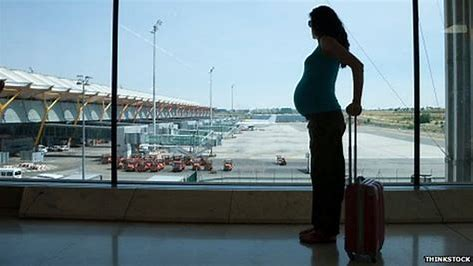
On each of the journeys, I shared the travel with women who appeared to be very pregnant.
I watched these dear girls navigating swollen legs, bulging bellies and perhaps a child or two in tow as they contorted themselves through the spaces of air and sea travel.
It sparked a thought.
What happens if you are born in the air or on the water?

As a woman who has been pregnant and had the privilege of birthing in a modern hospital with all the necessities of comfort and technology, my empathy maxed out for anyone facing such a birth.
As mothers who have given birth, most of us have forgotten the pain and the physical aspects and our memories cloud over to the joyous state of parenthood.
But what happens to the child born mid air or mid sea?
Is this a child without a country, born stateless?
Approximately one in every 26 million passengers, per aviation medical support firm MedAire, are sky-born.
At sea the numbers are now significantly lower than they were a century ago.In the early 20th century, the U.S. Census recorded individuals born at sea. The “born at sea” cohort peaked in 1900 with an estimated 8,100 persons. This number has dwindled over time, with the 2000 census reporting 316 individuals and the 2010 census noting 181 individuals born at sea residing in the U.S.
Under the 1961 Convention on the Reduction of Statelessness, for the purposes of determining the obligations under the convention, a birth on a ship or aircraft in international waters or airspace shall be treated as a birth in the country of the ship or aircraft’s registration.
Citizenship for someone born in the air or at sea can be a bit complicated and depends on several factors, but here’s a general breakdown:
Flag of the Ship (Law of the Flag)
- If someone is born on a ship in international waters, the ship’s nationality (the flag it flies under) can influence the baby’s citizenship.
- Many countries apply their laws to ships flying their flag, so a baby born on, say, a U.S.-flagged ship could be eligible for U.S. citizenship, depending on the parents’ citizenship.
Parents’ Nationality (Jus Sanguinis – Right of Blood)
- Most countries grant citizenship to a child based on the nationality of one or both parents. So if both parents are French, the child is likely to be a French citizen regardless of where the birth happened.
- In this case, it doesn’t really matter that the baby was born at sea — the parents’ citizenship rules apply.
Location of the Ship (Jus Soli – Right of Soil)
- If the birth happens in territorial waters (within about 12 nautical miles of a country’s coast), that country’s laws could apply.
- Some countries (like the U.S.) grant citizenship to anyone born in their territory — but not all countries do.
Statelessness Concerns
Some international treaties (like the 1961 Convention on the Reduction of Statelessness) encourage countries to grant citizenship to babies born in these tricky situations to avoid statelessness.
In rare cases, if the baby’s parents are stateless, or if no country’s laws grant citizenship to the baby, they could end up stateless.
And in this digital age you would think that there would be dedicated web sites focusing on sea births and sky births. But there isn’t.
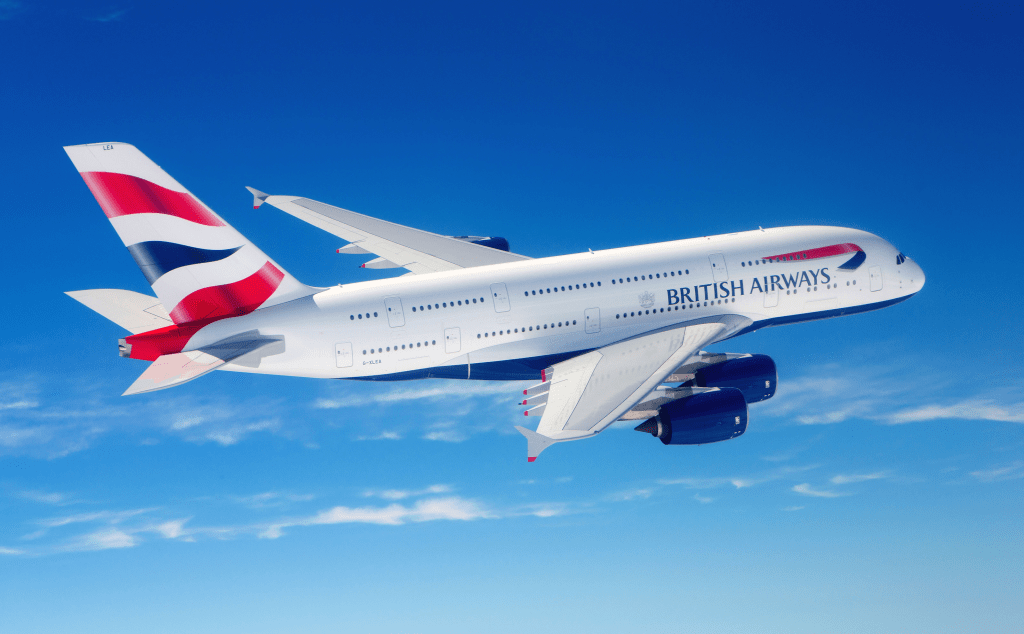
British Airways, my go-to for traveling home and through London, actually had such a birth and did a feature article about it in their in-flight magazine.

Renewing a passport and border checks are not the easiest of tasks for Shona Owen thanks to the unusual location of her birth. About 36,000 feet in the air.
To the bemusement of immigration officials, her passport read: “Holder born on an aeroplane.”
Shona Owen holds a UK passport, though her place of birth has caused confusion when she’s tried to renew the document. Originally, it was noted on a special page for official observations as follows: “Holder born on an aeroplane 10 miles south of Mayfield, Sussex.”
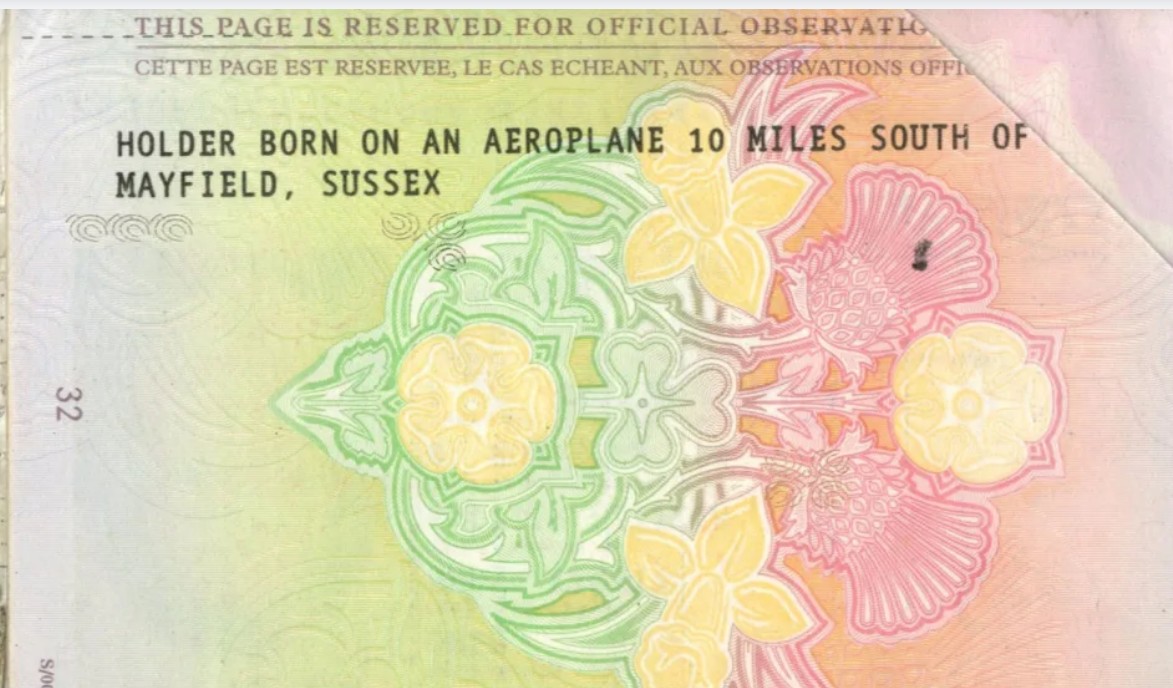
When the British passport format changed to follow EU directives, this page was eliminated, and she was forced to list a place of birth in a different format: “born at sea” was the closest official category available.
Owen is one of a small community of people who made their entrance into the world in this most dramatic of ways.
In 1990, Shona’s heavily pregnant mother Debbie Owen, accompanied by 4-year-old daughter Claire, was flying from Ghana, where she worked, to London on a British Airways flight. Unexpectedly, she went into labor.
She was moved into first class, which was cleared of passengers and an announcement was made for anyone with medical training to come forward.
The expectant mother was in luck.
Dutch doctor Wym Bakker, who had been helping women give birth in the bush in Ghana, was also on board. Fearing being left alone with a new baby and Claire if the plane was forced to land in Africa, Debbie tried desperately to hold on until the plane reached Europe.
On approach to London’s Gatwick airport, with the blinds drawn, soft music playing, her very own doctor and cabin crew on standby, Shona Kirsty Yves — spelling out the initials SKY — was born, increasing the passenger list by one.

“I’ve always been told I was born to travel, and I am working in the travel industry at the moment,” stated Shona in a CNN article. Shona now works as an online marketing executive for a luxury tour operator. “It’s quite a good story, and it’s a good ice breaker.”
An estimated 70 people worldwide are known as skyborns—impromptu deliveries who increase the passenger manifest, mid-flight.
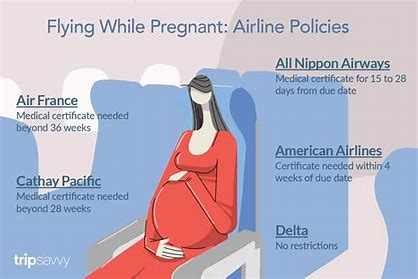
As a word of warning—probably not best to fly or be at sea if you are at 36 weeks’ gestation!
And most airlines recommend this but if and how the rule is enforced could prove interesting!
Do you have a birthing or pregnancy story while in transit? I would love to hear it!!
 Stacey Seaside
Leave a comment