
There is much that I miss when I remember my dear departed friends.
Halloween hurts for me.
I often refer to Agios Stefanos and Maria’s Taverna as My Office but before the St. Stefanos Cafe, my go to venue was The Dublin, until it was not.

In 2000, darling Lorraine Peters (Pouloudis) returned from Ireland, having taken care of her Mum in the last stages of her battle with cancer. Although depressed and saddened from the loss of Delia, she returned determined to actualize her dream–to create an Irish pub in Mykonos.
Perhaps it was born out of the early good times had back in the day at Stavros’ Irish Bar. Open only in summer, it was a great place to gather, drink and have a good laugh in Mykonos town. And if memory serves, Lorraine met her husband there.
A storage space for the sailing association, transformed through the artistic carpentry of her husband Theodori, and the Dublin was born. Front and center, sandwiched between Artemis Hotel and Okay Car Rentals, its veranda opened out on to the Aegean. We had just initiated the Mykonos Sailing Association (NAOM) and parents and grandparents often found themselves gathered on the Dublin’s veranda to have a coffee or a beer while the kids were schooled in the basics of sailing optimists and lasers.

The Dublin was great because it was all day, any day. You could park just in front, pop in for a coffee or a beer (or a cider which was my usual) alone or with pals. It was easy to go there, even on your own, because Lorraine was always there; my favorite leprechaun. Lo would tell me the latest tidbit or give me a good laugh about some recent shenanigans.
Connected through many layers
My connection to Lorraine had many layers. First and foremost, she became a good friend before our children brought us together.
From second grade on, my family home in suburban Chicago was located behind Saint Patrick’s School and Cathedral. I became “adopted Irish” going to school at Saint Pat’s. A convent of nuns lived on the corner in Joliet’s Irish Catholic neighbourhood. The blocks south of Marion Street were all Irish Catholic families. Our house stood between the homes of 8 O’Donnell children and their parents and 7 Maher children and their parents. Hence my Irish connection to Lorraine.
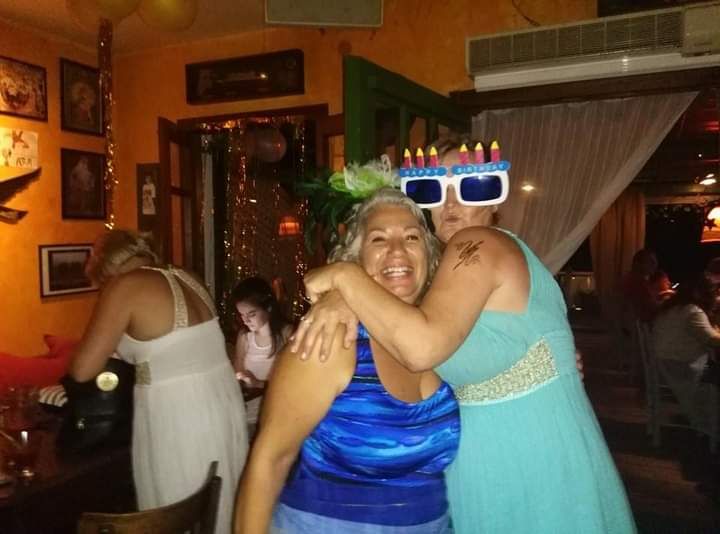
Lorraine’s father-in-law had been a childhood pal of my dad’s. His two brothers were in the States and were dear friends of his there. Hence our Mykonos family connection. Her husband Theo was one of my childhood buddies from summer visits to my grandparents.
Our children were the same ages so our “mom activities” criss-crossed constantly.
And even after activities with the sailing association slowed down at Agios Stefanos, the Dublin remained my go to gathering place summer-winter. Whether it was cafe, a burger, fish n’ chips, Lorraine was always there. I think one of the reasons I never felt homesick was because of Lorraine’s Dublin.
And then of course there were the parties– Saint Paddy’s and Halloween.
The leprechaun embraces Halloween
Lorraine embraced Halloween like no one I will ever know. (Okay, maybe I had a reputation for great kid’s Halloween parties? Most recently someone reminded me of “The Scary Room” I set up in the house for a Halloween children’s party I hosted. Kids sampled all kinds of scary stuff –putting a hand in a bowl of pasta in a blackened room and being told they were touching brains!)
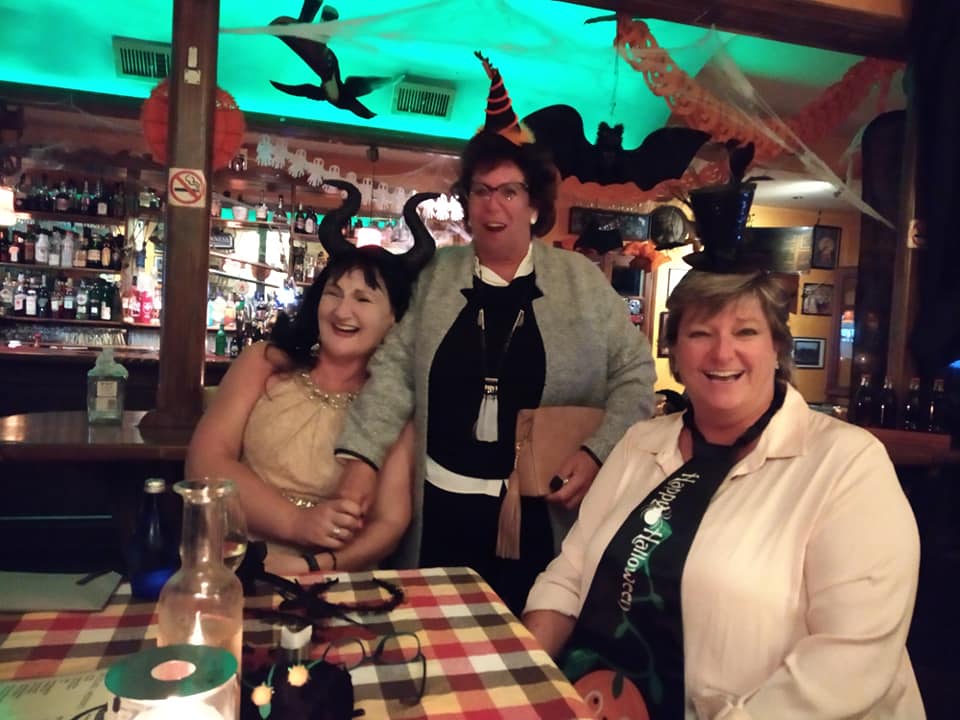
Lucy initiated the first party. I followed up with next one and Lorraine was inspired. Every year there after it was Halloween at the Dublin.

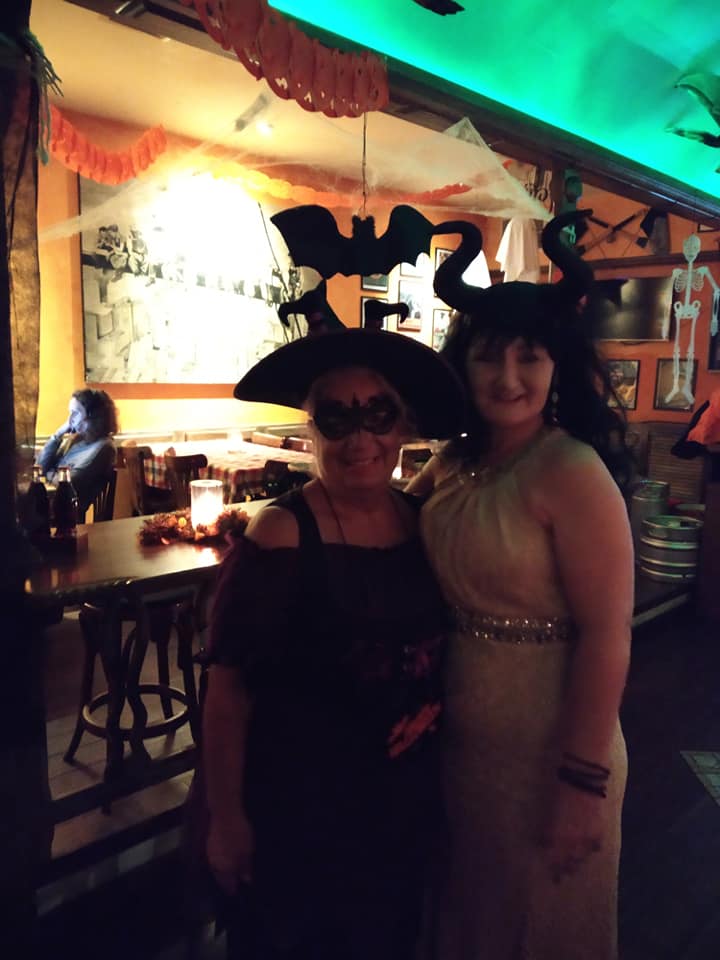
It gave us adults a chance to be kids again. We tried to come up with hilarious costumes — outrageously ugly, cute, scary or just weird. One year, God himself arrived–in the form of “Jesus.” Witch was always the most fun for me! Some local Greeks and folks who didn’t “get” Halloween said we were worshiping the devil and the dead. We ignored them and carried on.
A coffin with a vampire on the veranda

To greet customers as they arrived, Lorraine had a coffin that opened with a corpse. aka vampire, as you entered the Dublin on the veranda.
Inside. the place was decked out with cobwebs and spiders and black bats. One year there was even a cauldron.

We had so much fun. But so did she!

She would always moan days before about not really being in the mood and nobody would miss it.
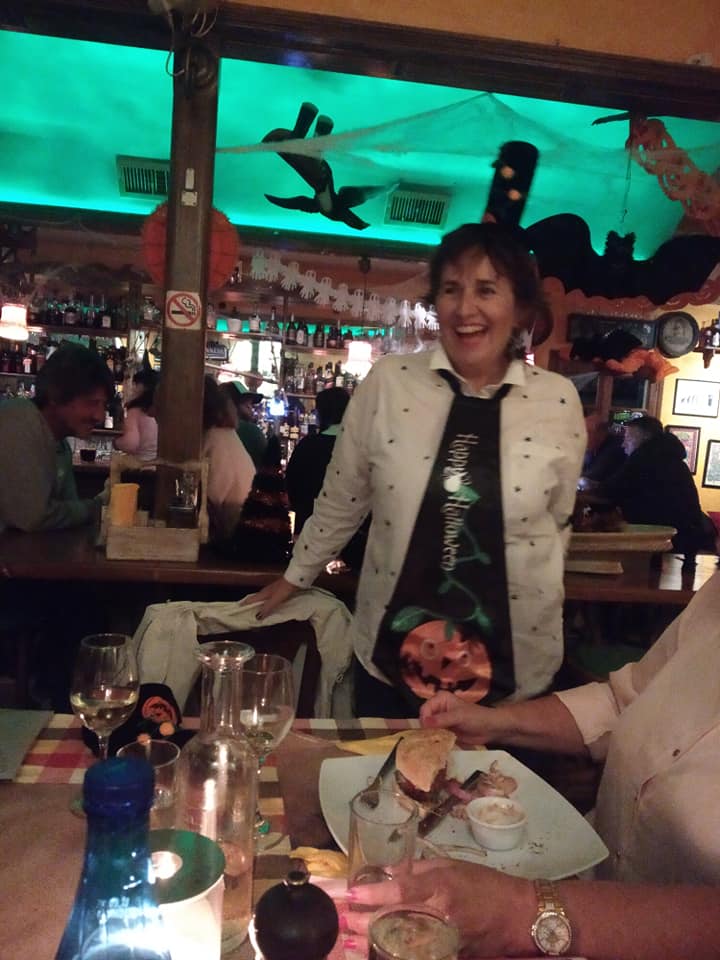
And then the day after we would still be having a hoot cleaning the place up.

The Greeks have “Apokries” or Carnivale — a celebration of Mardi Gras leading up to the beginning of Lent as winter moves into spring. The only similarity however is the costuming and raucous behavior. And the past few days I find full on displays of Halloween decor and costumes at the local Jumbo and 1 euro store. How far we have come since those early days in Mykonos? And of course Little Kook in Athens has been parlaying mucho Euros out of the Halloween Holiday since they first opened a decade ago.
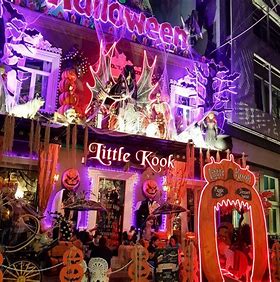
Although Halloween has been highly commercialized thanks to the US, it is not an American holiday.

The history of Halloween traces its roots back to the ancient Celtic festival of Samhain (pronounced “sow-in”), celebrated by the Celts over 2,000 years ago in what today’s Ireland, UK, and northern France. The Celts marked Samhain as the end of the harvest season and the beginning of winter, a time often associated with darkness and death. They believed that on the night of October 31, the boundary between the living and the dead blurred, allowing spirits to walk the earth.
The Origins of Samhain
Purpose of Samhain
Samhain was both a celebration and a solemn ritual to mark the end of the harvest and prepare for the long winter. It was a festival of fire, with large bonfires believed to ward off harmful spirits and bring warmth and light during the cold months.
Spiritual Beliefs
The Celts believed that during Samhain, the souls of the dead returned to the earthly realm. This liminal time, when the veil between worlds was at its thinnest, was thought to enable spirits—both friendly and hostile—to cross over. To keep away malevolent spirits, people wore costumes and masks, often of animal heads and skins, to avoid being recognized by these entities.

From Samhain to Halloween
When Christianity spread to the Celtic lands, church leaders sought to assimilate many pagan festivals, including Samhain. In the 8th century, Pope Gregory III designated November 1 as All Saints’ Day (or All Hallows’ Day), a day to honor saints and martyrs, and the night before became known as All Hallows’ Eve. Over time, All Hallows’ Eve transformed into Halloween.
Blending Traditions
The practices of All Saints’ Day (honoring the saints) and All Souls’ Day (honoring the dead) were combined with Samhain’s belief in the return of spirits, making Halloween a day for remembering the dead while also maintaining the festive aspects of costumes, feasts, and merriment.
Arrival in America
Halloween customs arrived in North America with European immigrants in the 19th century, particularly the Irish fleeing the Great Potato Famine. Traditions such as carving jack-o’-lanterns from turnips, which eventually shifted to pumpkins, took hold, and Halloween evolved to include more playful customs, like trick-or-treating.
Modern Halloween
In the 20th century, Halloween became increasingly commercialized, with an emphasis on costumes, decorations, haunted houses, and parties. Today, Halloween blends aspects of ancient Samhain with Catholic traditions and American innovations, creating a holiday that celebrates both the mysterious and the light-hearted.
Halloween Symbols with Samhain Roots
Jack-o’-lanterns
Originating as hollowed-out turnips or gourds with candles inside, jack-o’-lanterns were believed to ward off evil spirits. The shift to pumpkins came later, as they were abundant in North America and easier to carve.

Costumes
Originating from the Samhain tradition of disguising oneself from spirits, costumes have become an essential Halloween tradition, now taking on fun and creative interpretations beyond their protective origins.

Trick-or-Treating
Rooted in practices where people offered food to spirits or the poor in exchange for prayers, trick-or-treating evolved into a children’s activity involving going door to door for candy.
Samhain’s history of celebrating seasonal shifts and acknowledging the spirit world remains a core influence in Halloween, maintaining its blend of ancient rites, religious traditions, and cultural adaptations that continue to captivate people worldwide.
Fascinated by Halloween
Lorraine was of course one of those captivated by Halloween.
In 2020 on October 30 crossing into October 31st, my darling leprechaun left this earth. After a formidable battle with cancer, and me anxiously hoping her return to Mykonos after months away, she died.

I was visiting the home of a friend who wanted to show us the decorations they had created for the Halloween Party they would have that night. The phone rang while I was giggling over the decor. I think I let out a scream like a wounded animal–I who am always so composed.
She left us all on Halloween.
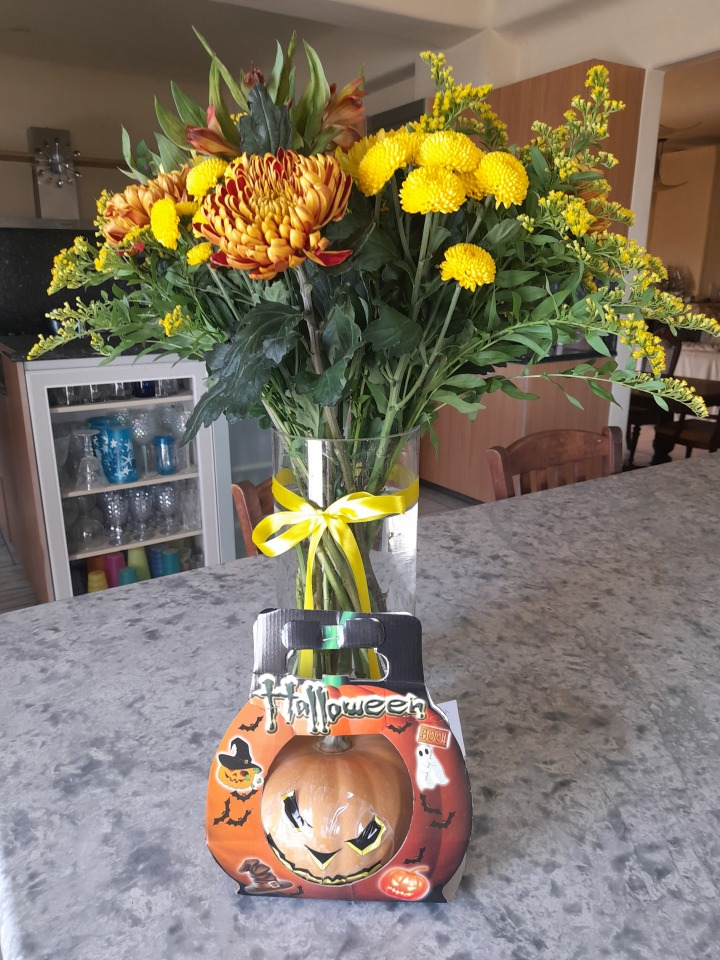
And in tribute to her, I make a point of celebrating.
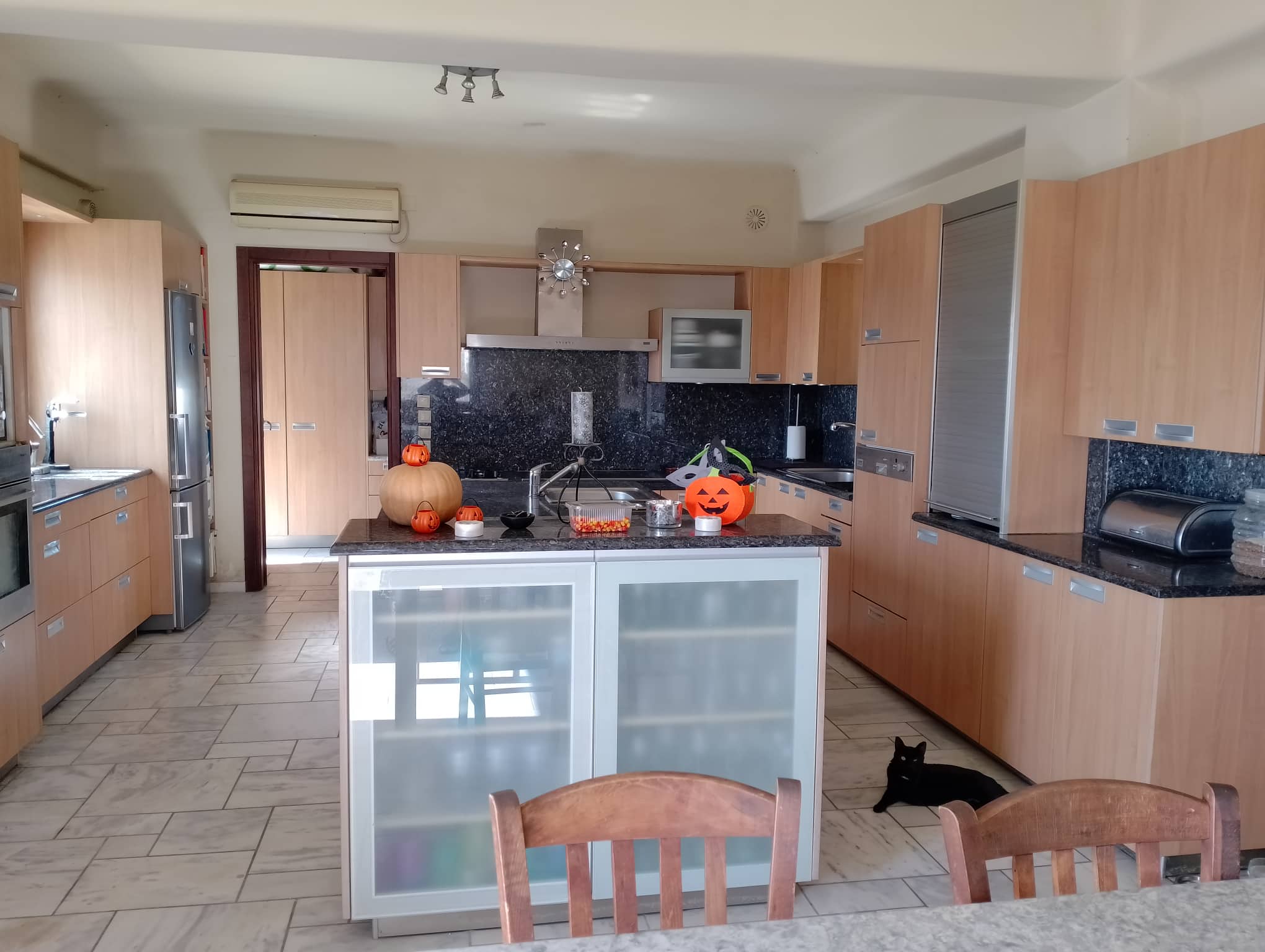
My kitchen decked out, complete with black cat.
Without the Dublin, in the year that followed, we found ourselves all dressed up at Agios Sostis, at Kiki’s taverna where Rianna and Vasili throw a great closing day with Halloween celebrations.

Another year we did an intimate party in one of the gal pals home.
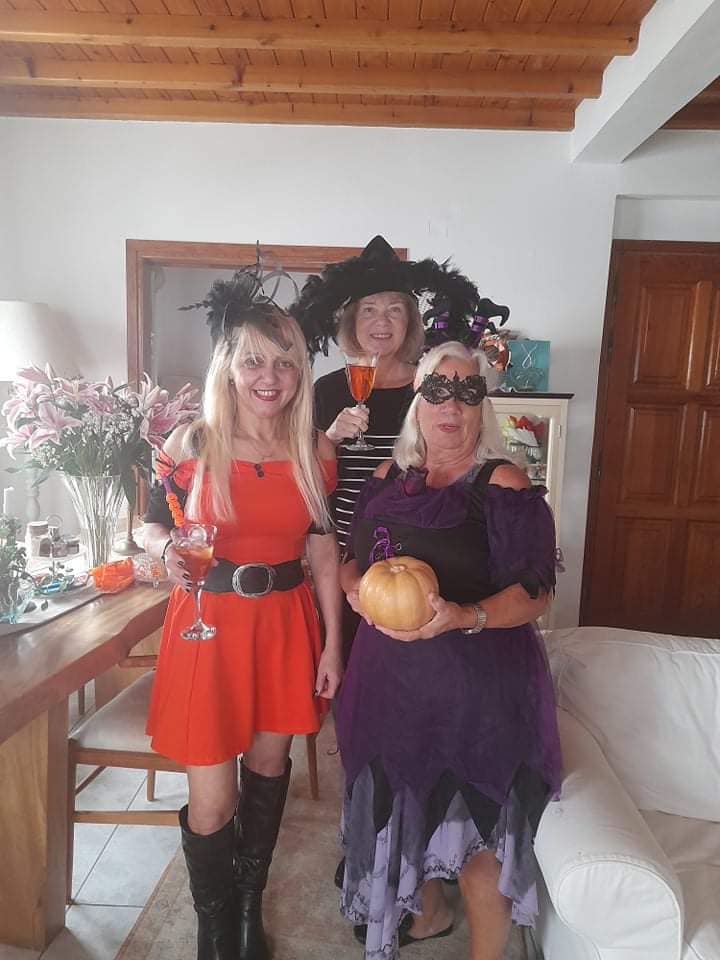
This year, I am going to have cafe with someone who evokes all the memories, in her honor.
God love you Lorraine. I will never forget you and will always remember the mischeivious twinkle in your smile.

Happy Halloween!
 Stacey Seaside
Leave a comment