

It was going to be 2 weeks.
Until the crisis was contained.
Four years on
We are still contracting Covid
Dying from Covid
Living with long Covid
Our “health” culture changed
Our socializing changed
Even our language changed.
Blase but then alert
Saturday, March 1, 2020
I had left for Florida at the end of January.
A month in the sunshine state spent with friends and family.
As I travelled back to Greece more people were wearing masks.
I headed to Thessaloniki for a few days for Dems Abroad work.
Another few days were spent in Athens as we conducted the Democratic Presidential Primary at the King George in Syntagma.
Already there were signs that it wasn’t business as usual.
We were expecting 200 people to attend.
About 50 showed up.
There was a demonstration in Syntagma and already people were starting to be more cautious about public gatherings because of the many deaths in Italy.
Tuesday, March 10 I find myself on the waterfront in Mykonos with the gal pals for our regular coffee morning.
Schools have been temporarily closed as a cautionary measure–and yet the harbor is full of kids and moms enjoying a spring like day and an unexpected day off.
We giggled amongst ourselves as we understood these folks had missed the memo. The whole point of calling off school was so that people wouldn’t gather!

By Friday the tones had turned a bit more serious.
The Prime Minister announced that all food service establishments would close as of Saturday, March 15 to clap down on further contagion.
I will never forget the moment COVID 19 drew a line in my life.
I was just pulling on my coat to get ready to head out to my regular Friday night out with the gang. My son’s walked in and both said, “Where do you think you are going? Everyone has been warned to stay home. The restaurants and bars are closing. The whole country is shutting down.”
All I could reply was “But nobody even has COVID in Mykonos! What will the restaurants do with all the food if they have to close for 2 weeks?” And the topper was, “Well they are open tonight so we are going out.”
The phone rang. It was Yvonne. She just had the same conversation with her son. She suggested we stay put.
And so we did.
My “seize the day” instinct had cold water poured all over it.
Ice cubes more accurately.
I was filled with dread.
My focus was not so much the health issue but the economic implications of all the wasted food, what people would do who did not cook at home and how the businesses would be impacted.
Greece was super cautious
Spooked by the brutal death toll in neighboring Italy, the authorities took no chances.
The first case in Greece was confirmed on February 26,2020 when a 38-year-old woman from Thessaloniki who had recently visited Νorthern Italy, was confirmed to be infected.
All carnival events in the country were cancelled on February 27th.
Health and state authorities issued precautionary guidelines and recommendations, while measures up to early March were taken locally and included the closure of schools and the suspension of cultural events in the affected areas.
Subsequent cases were related to others who had travelled to Italy and a group of pilgrims who had travelled to Israel and Egypt, as well as their contacts.
The first death
The first death from COVID-19 in Greece was a 66-year-old man, who died on March 12th.
Within two weeks, Greece shut all educational institutions, followed by the closure of bars, restaurants, museums, retail outlets, parks, commercial beaches, gyms and all services in all areas of religious worship of any religion or dogma were suspended.
Finally starting to emerge from the financial crisis, Greece found itself confronted with a potential public health disaster.
A highly contagious virus collided with a teetering public healthcare system picked apart by years of austerity.
With deaths totalling 15, full lockdown measures were brought into force.
The government acted early, trying to control the virus outbreak. With a population of 10 million, Greece only had 750 ICU beds nationwide.
A decade of austerity measures, and its ability to test, trace, and care for COVID-19 patients was limited.
Greeks were compliant
Greeks reacted to the lockdown with surprising compliance.
Greek society was probably better prepared to enter a state of alert as opposed to the initial complacency demonstrated toward the 2009 financial crisis.
Having several generations sharing a household also made Greeks more cautious and rule abiding.
No one wanted to bring Corona home to Yiayia and Papou.
Worldwide borders were closed and flights were cancelled.
Those who were allowed to fly were going home as only permanent residents and citizens were allowed entry to Greece.
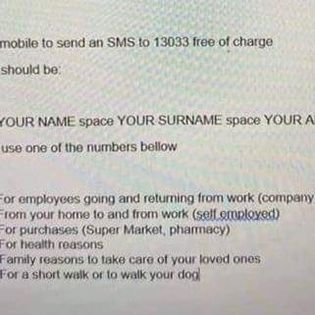
SMS messaging to leave home
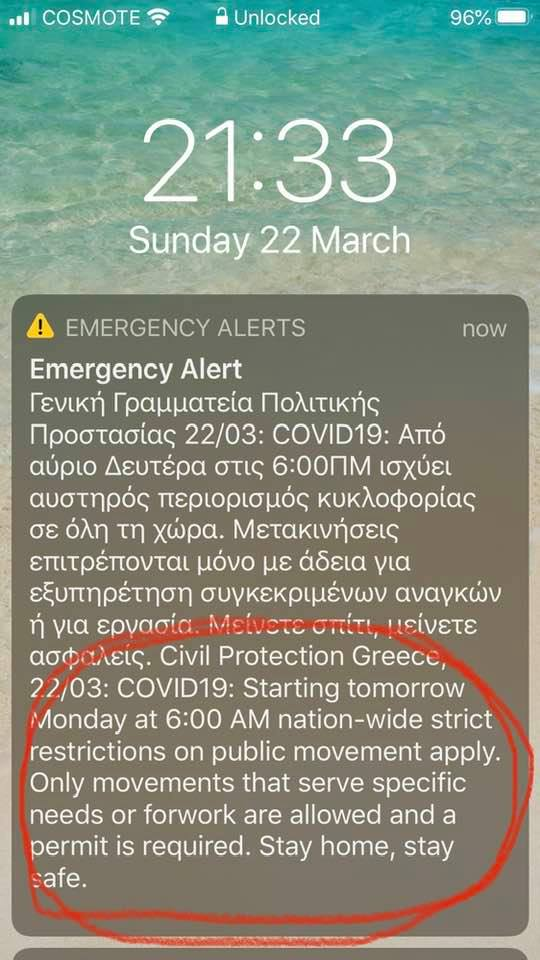
On March 23rd, a country wide lockdown was imposed.
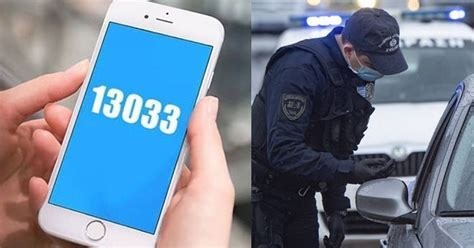
If you wanted to be out of your house, you got clearance through an sms app, for one of 6 reasons to be out.

Sotiris Tsiodras and Nikos Hardialias became the two most popular people in the country.
The soft-spoken infectious disease specialist at the University of Athens and the deputy minister for civil protection, hosted daily 6 pm virus briefings in Greece.
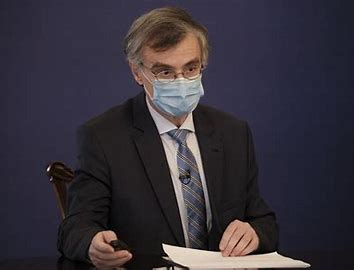
If you watched nothing else, you watched the doctor and politician dispense the latest information on the number of daily cases and deaths.

COVID comes to Mykonos
Mykonos finally caught up with the rest of the world.
Residents contracted the disease.
And of course, being a COVID carrier meant being stigmatized.

Friends and relatives died.
Funerals were conducted with hermetically sealed caskets with men in hazmat suits.
We were terrified.
We were frustrated.
We were angry.
But I was also relieved that I was in Greece.
I felt safer in Greece than I ever would have in the US.
Even if I wasn’t allowed to swim.
By May, it was obvious that the lockdowns had not contained the disease and the economic reality was that people had to get back to work, businesses had to become operative again.
And for Greece, that relied on the summer tourist season to carry the economic burden of keeping the country afloat, an end game needed to come into sight quickly.
Fast forward to 2024
March 14, 2024
COVID has claimed 1.2 million cases and nearly 21,000 deaths in Greece.
We have all lost people we loved to COVID.
Both here in Greece and across the planet.
Four years on, the very fabric of society has been rewoven and stitched anew.
You can no longer cough, sneeze or sniffle in public without getting a murderous look from those around you.
Wearing a mask is the new normal.
Everyone carries hand sanitizer.
Video calling and conferencing became as normal as making a phone call.
A country that was bogged down by massive bureaucracy and paperwork went digital and online very quickly. But there is still much that has not been fast-tracked to the digitized age.
And although initially there was great trust in the leadership of Greek government on health issues, today there is only anger.
The number of ICU beds only increased by 200 in the country, even though the EU offered so much money to help Greece.
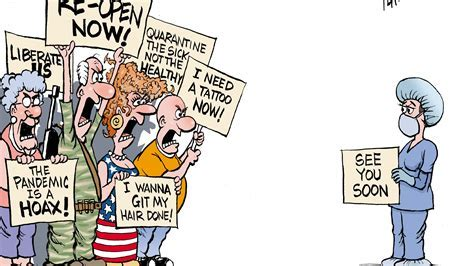
Another new normal is the lack of trust of government, particularly those that are liberal democracies.
Democracy is in peril across the globe after the pandemic
The pandemic has clearly contributed to an accelerated global democratic recession, mainly accounted for by struggling democracies and authoritarian states.
The proportion of “Not Free” countries (scoring low in political rights and civil liberties) is now the highest in the past 15 years.
Only very strong democracies saw less vulnerability to democracy erosion. Yet, even strong democracies are now acting more authoritatively in relation to public restrictions and vaccine mandates.
COVID was never going to be the “common enemy” that finally united the world
Solidarity is created by making an enemy of someone else.
Trump tried to make an enemy by blaming the virus on China. His xenophobic rhetoric spread, feeding dangerous conspiracy theories, threatening scientific research and leading to a rise in hate crimes.
Thanks to Trump, some Americans think the vaccine represents a weapon of oppression, if not a literal weapon.
Although physically distanced, we learned to connect online
The pandemic triggered more of life being online. This included remote work, and online education, also for organizations and individuals who would not have otherwise made the change.
Online shopping as a share of total retail is now significantly higher that it was before the pandemic. Hybrid and remote working appears to have stuck to a significant degree:
Educational institutions around the world have adopted online teaching instead of traditional classroom teaching, but not without challenges, including initial lower-quality teaching, lack of social interaction, and technical difficulties. These problems may be mitigated as educators adopt new technologies and improve online formats.
Terms we now use, created by the pandemic
To be able to survive a world hurtled into a pandemic, we found ourselves continuously updating our intellectual data bank.
COVID-related glossaries terms created by covid or given to the vernacular–have forced us to learn and get crash courses in any number of unanticipated fields—from biology and immunology to statistical rhetoric, government operations, and civics.
Coronavirus has led to an explosion of new words and phrases, both in English and in other languages. This new vocabulary helped us make sense of the changes that have suddenly become part of our everyday lives.

As the world began to learn more about the virus, we quickly had to familiarize ourselves with a range of words, including the actual term “COVID-19.” The coronavirus disease COVID-19 is an infectious disease caused by coronavirus-2 (SARS-CoV 2). The symptoms vary from mild manifestations of respiratory infection to severe disease.
At first we didn’t know how to pronounce it or what to call it. Learning the language of the disease and all the medical jargon it included helped us to feel as though we had some control over the information being dumped on us. They became part of our vernacular to match our social reality.
While Corona mutated, our lingo mutated
These words rotated into our daily linguistic regimen through legacy and social media platforms as well as community word of mouth.
WWII gave us “radar” (RAdio Detection And Ranging) as well as “fubar” (Fucked Up Beyond All Recognition), “snafu” (Status Nominal: All Fucked Up, although Situation Normal All Fucked Up is also a common interpretation). So COVID was bound to provide an expanded vocabulary for the common man. The new vocabulary helped people articulate their worries about the biggest health crisis we have seen in generations.
Perhaps one of the biggest factors in the spread of coronavirus terminology is the fact that we’re more digitally connected than ever before – in a way we weren’t during the SARS outbreak in 2002 or the Swine Flu outbreak in 2009.

COVID Goes Colloquial
I have listed words and expressions that are now an intrinsic part of our vernacular.
It is truly scary how many of these have been internalized.
COVID-19
corona
corona virus
incubation period
transmission
fatality rate
contagion
pandemic
epidemic
lockdown
essential workers

vaccinated
new strain
Omicron
restrictions tightened
preventing airborne transmission
N-95
social distancing
personal protective equipment or PPE
Covid-safe or Covid-secure
bubble
self-isolate
asymptomatic
efficacy
a regional tier
households
isolation
intubated
ventilator
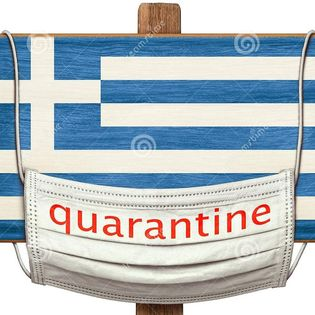
quarantine
contact tracing
flattening the curve
covid fog
long covid
quaranteam
quarantini
zooming
zoombombing
Covidiot
Covideo Party
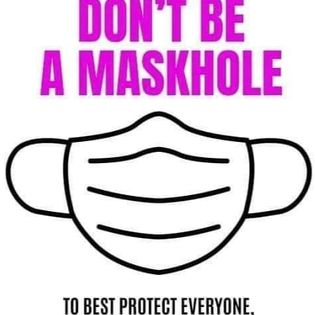
Maskhole
Make the days count
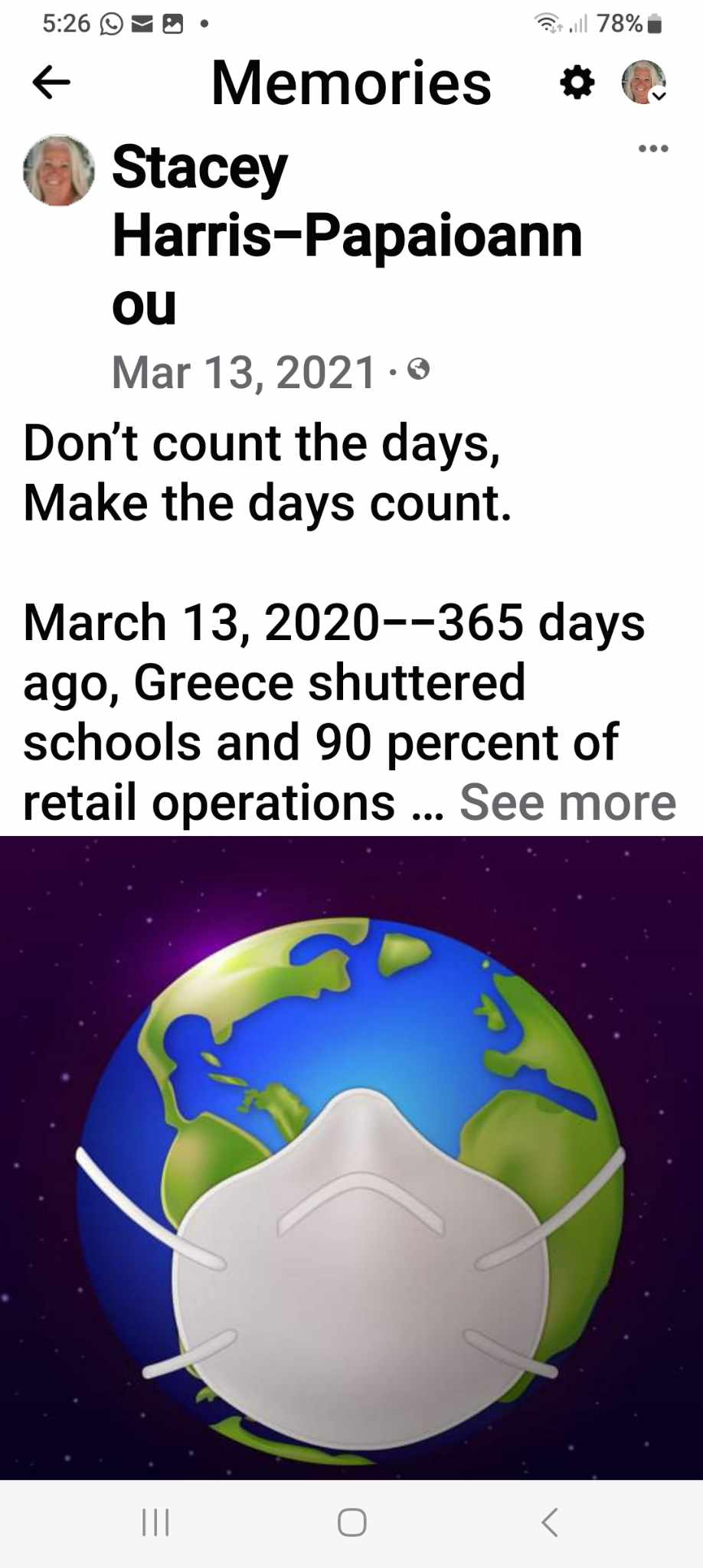
A memory came up on Face Book that prompted today’s post.
The text began:
Don’t count the days
Make the days count.
If I have learned anything from COVID, I have learned that my “seize the day” mentality is not in error.
Every moment we have is so very precious.
Only when it is no longer there do we appreciate its true value.











 Stacey Seaside
Leave a comment