

Kalo Mina!!!
Today marks the first of the month.
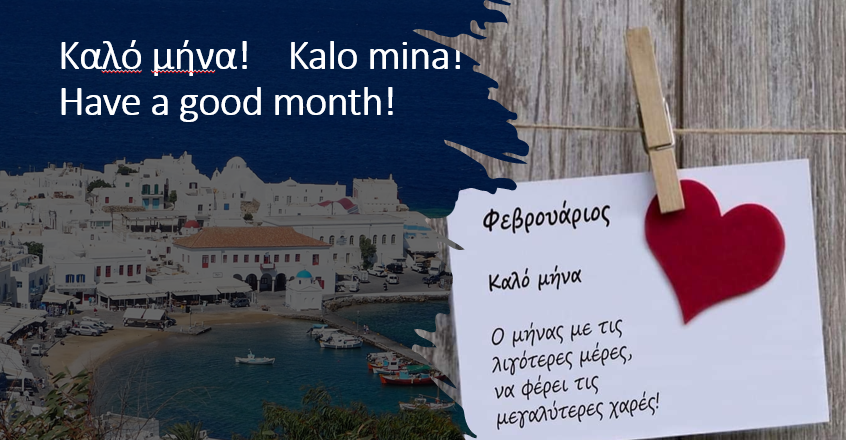
Here in Greece, we make a point of greeting each other–in person, on the phone or by text message– by saying “have a good month–Kalo Mina!” (Καλό μήνα!)
We also do it if it is the beginning of the week -Kali Evdomada (Καλή εβδομάδα!).
If there seems to be a marked change in the seasons–Kalo Kalokairi (Have a good summer) and likewise Kalo Xeimona (Have a good winter).
The mentality seems to be why just say good morning when you can point out specific calendar positioning?!?!?
Saying Kalo Mina is an added bridge of human kindness.
Wishing others “a good month” will cross the nation but time framed greetings cross cultures as well.
And with the onset of texting, social media and chat groups, there are now hundreds of memes and gifs dedicated to having a good month!

The first for the first
How did this habitual greeting originate?
And why do I make a point of greeting friends and family in some thematic way when the calendar hits 1?
When the month flips, going from 30 or 31 to 1, it is a signal for newness.
As I have aged, the opportunities for “new” anything seem to be getting less and less!
I seize the chance to celebrate a new month with all the potential it packs.
Whether that includes finally attending to a long-procrastinated task, heading off the island for a few days of work/leisure to the Acropolis Metropolis, beginning a prized holiday within the month–it all signals something new to hope for.
Hecate sparks well-wishing
The first day of each month was considered sacred to Hecate, the Greek goddess of magic and witchcraft.
Hecate was a chthonic goddess that preceded the Olympians. Cythonic gods ruled the underworld and earth. A shrine to Hecate was placed at the entrances of homes or even cities, hoping to protect them from the evil spirits that roamed the world.
Hecate was often depicted holding two torches or a key. She was honoured as a protective goddess who brought prosperity.
Following Greek mythological deities, first day of the month was associated with the moon and the onset of a new lunar cycle.
For most Greeks, they hold the superstition that whatever happens on the first day of the month will set the tone for the rest of the month. Folks start positive with good wishes for the entire month and keep your fingers crossed!
Kalo Mina goes beyond Greece
But “have a good month” possibly predates even the Greeks.
According to ThoughtCo, a website dedicated to premier reference with a 20+ year focus on expert-created education content, the ancient Egyptians made a point of celebrating the first day of each of the months in the year. The ancient Egyptians also had 12 months based on the solar calendar.
The first of the month was dedicated to a different Egyptian god or goddess who presided over the whole month, and a general holiday began each month. The first month in the Egyptian calendar is called “Thoth,” which is dedicated to Thoth, the ancient Egyptian god of wisdom and science, inventor of writing, patron of scribes, and “he who designates the seasons, months, and years.
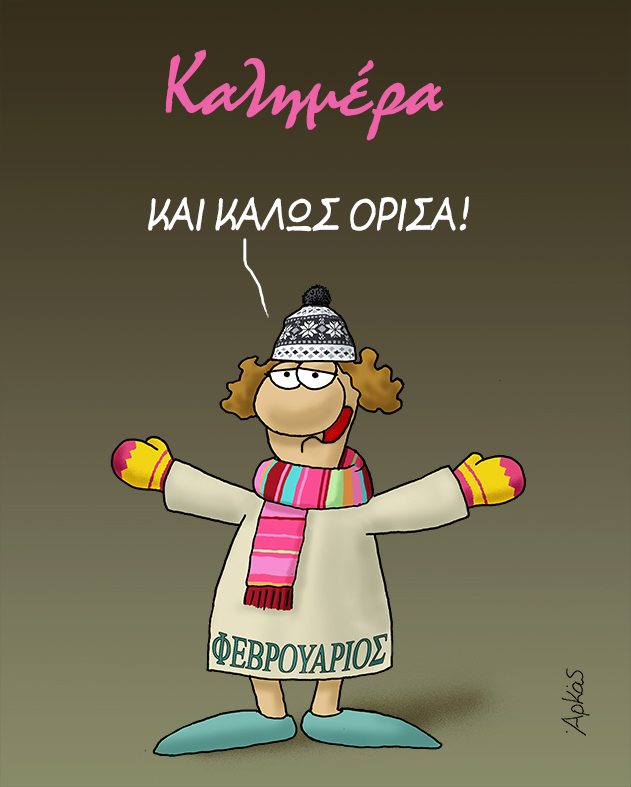
Every god gets its month
Ancient Greece was divided into different city-states. Each city had its own version of the calendar with different names for each of the months. As some areas were the patron region for a particular god, the calendar refers to that god of the region.
The months for Athens’ calendar are each named for festivals celebrated during that month in honor of certain gods. The first month of the Athenian calendar is Hekatombion. (Almost sounds like October, doesn’t it?) The name likely derives from Hecate. The first month of the calendar began around September. Oddly enough, the Greek Orthodox Christian church begins its calendar year on September 1 as well.
The months in Greek are Ianuários (January), Fevruários (February), and so on. These months, both in the Greek and in English languages, are derived from the Roman or Latin words for the months on the Gregorian calendar. The Roman Empire had eventually subjugated the Greeks. In 146 BC, the Romans destroyed Corinth and made Greece a province of the Roman Empire. Greece began to absorb Roman customs and ways as did much of the ancient world at the time.
January was named for Janus, the Roman god of doors, signifying beginnings, sunset, and sunrise. The god was personified as having one face looking forward and one looking backward. He was probably considered the most important Roman god, and his name was the first to be mentioned in prayers, regardless of which god the worshipper wanted to pray to.

Time stamped greetings from around the globe
Similar expressions are found in various cultures around the world.
Some cultures that place a strong emphasis on wishing others well in terms of time periods larger than just the immediate moment. For example:
- Jewish Culture: In Jewish culture, it is customary to wish someone a “Shabbat Shalom” on Friday evening or Saturday, which means “Sabbath Peace.” Additionally, at the beginning of each month in the Jewish calendar, people often wish each other a “Chodesh Tov,” meaning “Good Month.”
- Islamic Culture: In Islamic culture, the traditional greeting is “As-salamu alaykum,” meaning “Peace be upon you.” Muslims also have specific greetings during the holy month of Ramadan, such as “Ramadan Mubarak” or “Ramadan Kareem,” which convey good wishes during this sacred time.
- Chinese Culture: In Chinese culture, people often exchange wishes for good fortune and prosperity during the celebration of the Chinese New Year, which typically involves wishing others a prosperous and healthy year ahead.
Kalo Mina
Wishing someone well for a particular time frame or period reflects the diverse way we greet one another across cultures but the lesson learned here is in the humanity and the kindness of the gesture.
Wishing someone a good month is a simple way to convey a social and cultural nicety that fosters a sense of community and connection.
Kalo Mina is a small gesture that adds something extra, something special to the average greeting.
Emphasizing a time stamp with good wishes shows that we as humans have always sought to offer each other kindness.
In Greece, we not only greet our friends and family with “Kalo Mina,” but
the cashier at the grocery store,
the teller at the toll booth,
the customer service rep at the end of a phone conversation.
A small but lovely way to build our bridges of human kindness.
Kalo Mina!!!


 Stacey Seaside
Leave a comment